The Plant That Wounded Tigers Roll In — Now in Your Skincare
Centella asiatica isn't new. Ayurvedic medicine has used it for over 3,000 years. Traditional Chinese medicine calls it ji xue cao (積雪草) — "snow accumulation grass." In Southeast Asia, it's consumed as a vegetable and brewed into tea. What's new is the clinical evidence that has accumulated around it over the past two decades, and the reason dermatologists now specifically recommend it for post-procedure recovery, rosacea, and compromised skin barriers.
The active compounds — four triterpenoids called asiaticoside, madecassoside, asiatic acid, and madecassic acid — aren't just soothing in the way chamomile or aloe is soothing. They modify cellular behavior. They stimulate collagen Type I synthesis in fibroblasts. They inhibit inflammatory cytokines at the transcriptional level. They accelerate re-epithelialization (the process by which damaged skin replaces its surface cells). That's a meaningful difference from cosmetic "calming" ingredients that reduce redness without changing the underlying biology.
This guide covers what centella actually does at the cellular level, which skin conditions benefit most, and why the delivery format (mask vs. serum vs. cream) affects whether you get clinical results or just a pleasant sensation.
The Four Active Compounds — and What Each One Does
Centella contains hundreds of phytochemicals, but four triterpenoids carry most of the therapeutic weight. Understanding them individually explains why centella works across such different skin conditions.
Asiaticoside is the primary collagen stimulant. Research published in Phytomedicine (Lu et al., 2004) demonstrated that asiaticoside increases Type I collagen production in human dermal fibroblasts by up to 33% at clinically relevant concentrations. This is the compound that makes centella relevant for anti-aging and wound healing — it provides the structural reinforcement that damaged or aging skin needs.
Madecassoside is the primary anti-inflammatory agent. It inhibits both COX-2 (the same pathway targeted by ibuprofen) and NF-κB (a master regulator of inflammation). A 2021 study in the Journal of Ethnopharmacology showed madecassoside reduced UV-induced inflammatory markers in keratinocytes by over 50%. For rosacea and post-procedure recovery, this is arguably the most important compound in centella.
Asiatic acid provides antibacterial and antifungal activity. It disrupts the cell membranes of Staphylococcus aureus and Candida albicans, two organisms commonly involved in skin infections that complicate wound healing. This makes centella particularly useful for acne-prone skin where bacterial colonization delays recovery.
Madecassic acid stimulates angiogenesis — the formation of new blood vessels around damaged tissue. Better blood supply means faster delivery of oxygen and nutrients to the repair site. This is the compound most relevant to post-laser and post-microneedling recovery, where the skin's microcirculation has been disrupted.
6 Skin Conditions Where Centella Performance Is Well-Documented
1. Post-Procedure Recovery (Laser, Microneedling, Chemical Peels)
This is the use case that put centella on the dermatology map. After ablative laser treatments, the skin's barrier is intentionally destroyed to trigger regeneration. Centella doesn't just soothe the resulting inflammation — it accelerates the re-epithelialization process that closes the wound.
A randomized controlled trial published in Lasers in Surgery and Medicine (2014) found that patients applying centella extract after fractional CO₂ laser resurfacing showed 53% faster re-epithelialization compared to those using standard petrolatum-based aftercare. The centella group also reported significantly less burning and itching.
Clinical-grade masks deliver centella in the occlusive format that maximizes absorption on freshly treated skin — which is why Centella Asiatica sheet masks are standard aftercare in many Asian aesthetic clinics.
2. Rosacea and Persistent Facial Redness
Rosacea involves chronic inflammatory activation in the skin's vascular and immune systems. Centella addresses both: madecassoside suppresses the inflammatory cascade while asiaticoside strengthens the connective tissue surrounding blood vessels, making them less prone to dilation and visible flushing.
A 12-week clinical study from South Korea (documented in the Annals of Dermatology, 2019) showed that topical centella extract reduced rosacea severity scores by 42% — comparable to low-dose topical metronidazole, a prescription medication. The advantage: no risk of tachyphylaxis (reduced effectiveness over time) that limits long-term metronidazole use.
3. Acne and Post-Inflammatory Hyperpigmentation
Centella addresses acne through three distinct pathways: asiatic acid acts antibacterially against C. acnes, madecassoside reduces the inflammation that causes papule formation, and asiaticoside accelerates the healing of existing lesions. The combination is particularly effective for preventing post-inflammatory hyperpigmentation (PIH), the dark marks acne leaves behind — because faster healing means less time for melanocytes to be stimulated by the inflammatory signal.
For oily, acne-prone skin, a centella mask provides treatment without the heavy occlusive base that many acne treatment creams require. The Centella Asiatica Soothing and Repair Mask delivers all four triterpenoids through a lightweight non-woven base that won't clog pores during the 15–20 minute application window.
4. Atopic Dermatitis (Eczema)
Atopic dermatitis involves a genetic deficiency in filaggrin (a protein in the skin barrier) combined with Th2 immune system overactivity. Centella's dual action — barrier reinforcement through collagen stimulation and inflammation reduction through NF-κB inhibition — addresses both components simultaneously.
A pediatric study published in the Journal of Dermatology (2017) found that centella-containing moisturizer reduced SCORAD (Scoring Atopic Dermatitis) scores by 57% over 4 weeks, with improvement in both objective signs (erythema, excoriation, lichenification) and subjective symptoms (itching, sleeplessness).
5. Photoaging and Cumulative UV Damage
UV-induced photoaging isn't just wrinkles — it's a structural degradation of the dermal extracellular matrix. UVA radiation destroys collagen Type I and Type III, degrades elastin fibers, and stimulates abnormal matrix metalloproteinase (MMP) activity that continues breaking down structural proteins even after sun exposure ends.
Madecassoside directly inhibits MMP-1, the enzyme primarily responsible for collagen breakdown after UV exposure. Combined with asiaticoside's collagen-stimulating effect, centella provides both damage prevention (inhibiting breakdown) and repair (stimulating new synthesis). The Soothing and Repair Mask applied after sun exposure addresses both directions of the equation.
6. Surgical and Traumatic Wound Healing
Beyond cosmetic dermatology, centella has a well-established role in surgical wound management. The standard medical application (Madécassol, a centella-derived pharmaceutical) is prescribed across Europe and Asia for post-surgical wound healing, burn recovery, and stretch mark prevention.
The wound-healing mechanism operates at the fibroblast proliferation stage — asiaticoside increases both the number and activity of fibroblasts at the wound site, accelerating the transition from inflammatory phase (days 1–3) to proliferative phase (days 3–21) by approximately 20–30%. This is the same technology repurposed in medical-grade facial dressings designed for cosmetic recovery.
Centella vs. Other "Soothing" Ingredients — What Makes It Different
Centella vs. Aloe Vera
Aloe provides surface hydration and mild anti-inflammatory action (via salicylic acid and polysaccharides). It lacks the collagen-stimulating and re-epithelialization-accelerating properties that make centella clinically relevant. Aloe makes burns feel better. Centella makes burns heal faster. They're in different categories.
Centella vs. Niacinamide
Niacinamide (vitamin B3) strengthens the barrier by increasing ceramide synthesis and reducing TEWL. It's a maintenance ingredient — excellent for ongoing barrier health. Centella is a repair ingredient — it accelerates active healing processes. They're complementary: centella for acute damage and inflammation, niacinamide for ongoing maintenance and prevention. A routine that includes both covers repair and resilience.
Centella vs. Cica Creams (Madecassoside Isolates)
"Cica" products (popularized by Korean skincare brands like Dr. Jart+ Cicapair) typically contain isolated madecassoside as the primary active. This gives you the anti-inflammatory component without the full triterpenoid profile. Whole centella extract delivers all four actives — anti-inflammatory, collagen-stimulating, antibacterial, and angiogenic — which explains why whole-extract formulations tend to outperform isolated cica products for wound healing and barrier repair, while isolated madecassoside may be sufficient for mild redness control.
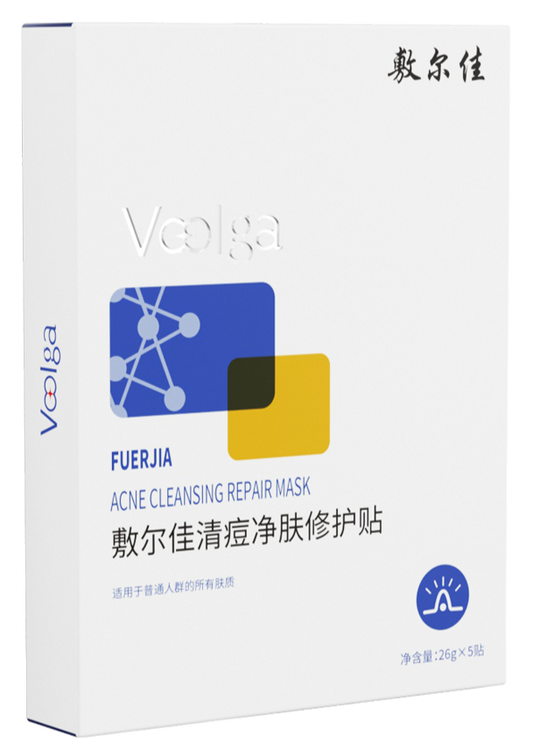
Voolga's Centella Asiatica Soothing and Repair Mask uses whole-plant centella extract rather than isolated madecassoside, delivering the full triterpenoid spectrum for comprehensive action.
Delivery Format Matters: Why Mask > Serum for Centella
The four centella triterpenoids have moderate-to-poor water solubility. This means standard aqueous serums (which are 90%+ water) deliver relatively low concentrations of active compounds to the skin surface. The occlusive format of a sheet mask solves this in two ways:
Concentration gradient. A mask traps the centella extract against the skin surface, preventing evaporation and creating a sustained concentration gradient that drives penetration over 15–20 minutes. A serum, by contrast, evaporates and oxidizes within minutes of application, reducing the effective delivery window.
Temperature optimization. Occlusion slightly raises skin surface temperature (by 1–2°C), which increases lipid fluidity in the stratum corneum and widens the intercellular channels through which centella compounds penetrate. Research in the International Journal of Pharmaceutics (2019) measured a 2.4x increase in triterpenoid penetration under occlusive vs. open conditions.
This doesn't mean centella serums are worthless — they're useful for daily maintenance. But for acute treatment (post-procedure, flare-ups, active barrier repair), the mask format delivers clinical-grade concentrations that serums can't match.
How to Use Centella Masks in a Real Routine
For active repair (post-procedure, rosacea flare, barrier damage): Apply daily for 7–14 days. The concentrated delivery overwhelms the inflammatory response and provides the collagen-building substrates needed for rapid tissue regeneration. This is the same protocol used in clinical aftercare.
For maintenance and prevention: 2–3 times per week is sufficient. This provides ongoing anti-inflammatory support and collagen stimulation without unnecessary frequency. Ideal for people with chronic low-grade inflammation (sensitive skin, early rosacea) or cumulative UV exposure.
For acute sunburn recovery: Apply within 2 hours of sun exposure (after cooling the skin with a damp cloth). The MMP-1 inhibition and collagen stimulation address UV damage at the molecular level before the visible inflammatory response fully develops.
Timing within a routine: Cleanse → Centella mask (15–20 minutes) → remaining serum steps (if any) → moisturizer. The mask goes first on clean skin to maximize triterpenoid penetration without competing with other actives.
What to Look For on the Ingredient List
Not all products labeled "Centella" or "Cica" deliver the same thing. Check the INCI list for these specifics:
"Centella Asiatica Extract" vs. isolated compounds. Whole-plant extract delivers all four triterpenoids. Products listing only "Madecassoside" provide anti-inflammatory action without the collagen-stimulating and wound-healing components. For comprehensive skin repair, whole extract is superior.
Extract concentration. Look for products that specify extract percentage (typically 40–80% for clinical-grade products). Lower concentrations (<10%) may provide mild soothing but lack the triterpenoid load needed for measurable collagen stimulation or wound healing acceleration.
Formulation pH. Centella triterpenoids are most stable and bioavailable at pH 4.5–6.0. Products outside this range (very acidic or very alkaline) degrade the active compounds faster, reducing effective delivery even when initial concentration is adequate.
Complementary ingredients. Centella works synergistically with sodium hyaluronate (hydration support during repair), peptides (additional collagen signaling), and niacinamide (barrier reinforcement). Products combining these ingredients provide multi-pathway support rather than relying on centella alone.
Frequently Asked Questions
Is centella asiatica safe for sensitive skin?
Centella is one of the best-tolerated active ingredients in skincare. Clinical studies across multiple populations (including atopic dermatitis patients and post-procedure patients with compromised barriers) report very low rates of allergic reaction or irritation. Unlike retinoids or acids, centella works through anti-inflammatory and repair pathways rather than stimulating cell turnover, so it doesn't cause the redness, peeling, or sensitivity associated with traditional actives.
Can I use centella masks with retinol or vitamin C?
Yes — centella is compatible with both retinol and vitamin C. The anti-inflammatory action of centella may actually reduce the irritation these actives cause. Use the centella mask first (on clean skin), follow with your retinol or vitamin C, then your usual moisturizer. The mask primes the skin for active absorption while buffering the inflammatory response.
How quickly will I see results from centella?
Anti-inflammatory effects (reduced redness, calming of active irritation) are typically visible after 1–3 applications. Collagen-related benefits (improved wound closure, reduced appearance of fine lines, barrier strengthening) require consistent use over 2–4 weeks, as collagen synthesis is a slower biological process. For post-procedure recovery, visible improvement in healing speed is documented within the first week of daily application.
Is centella the same thing as "tiger grass" or "gotu kola"?
Yes — centella asiatica, tiger grass, and gotu kola are all names for the same plant (Centella asiatica). "Tiger grass" comes from the folkloric observation that wounded tigers roll in the plant. "Gotu kola" is the Sinhalese name used in Ayurvedic medicine. The clinical skincare ingredient is the same standardized extract regardless of which name appears on packaging.
What's the difference between centella masks and cica creams?
"Cica" products typically contain isolated madecassoside (one of four centella triterpenoids) as the primary active ingredient. Centella masks using whole-plant extract deliver all four triterpenoids — asiaticoside, madecassoside, asiatic acid, and madecassic acid — which provides broader therapeutic action including collagen stimulation, antibacterial activity, and angiogenesis support. For comprehensive repair, whole-extract masks outperform isolated cica creams.