How the Grey Market Actually Moves Counterfeit Cosmetics
Most shoppers use "fake" as a single category. The supply chain has two, and the difference matters when you're trying to work out what arrived in the mail. Counterfeit products are imitations, printed, filled and boxed with no connection to the brand they copy. Grey-market skincare is genuine product that has fallen out of the brand's authorized chain: diverted lots, bulk stock bought at closeout, inventory that sat in a hot warehouse past its date, or units repackaged after damage. Both end up in the same marketplace listing, and both leave you unable to verify what you actually bought.
The mechanics are unglamorous, which is the point. Someone buys pallets of near-expiry or diverted stock, or commissions cartons that copy a popular package, then lists them across marketplaces under seller names that rotate whenever a listing gets pulled. Repackaging is the part people underestimate. A genuine outer carton gets refilled, or two damaged boxes are combined into one "new" box, and the unit looks untouched because the packaging itself is real.
Skincare is a soft target for structural reasons. The unit is small, so a single pallet holds thousands of masks and a container holds hundreds of thousands. Margins are wide: a mask that retails for $11 to $20 is cheap to copy. Demand repeats, which means a fake only has to be convincing once. And clinical vocabulary travels, because "medical-grade," "dressing" and "sodium hyaluronate" are easy to print on a box whether or not they describe what's inside. Compare that with a pair of sneakers, where fit and materials give the game away in seconds. The judgment on a sheet mask is slower and quieter, and most of it happens after the money has changed hands.
One more layer worth naming: reviews. A listing with hundreds of five-star ratings feels safe, and it partly is, until you notice the reviews are for a different product the same seller used to carry, or that they cluster into a two-week window. Ratings follow the seller account, not the batch. I treat a strong rating as evidence that someone received something acceptable once, not as evidence about the box I'm about to open.
Why "Genuine" Is Not the Same as "Authorized"
A product can be real and still be sold badly. A genuine mask stored in the wrong conditions for two years, or shipped from a channel the brand never approved, is still genuine. It just isn't under anyone's quality control. That gap is exactly what the authorized-reseller model in skincare exists to close.
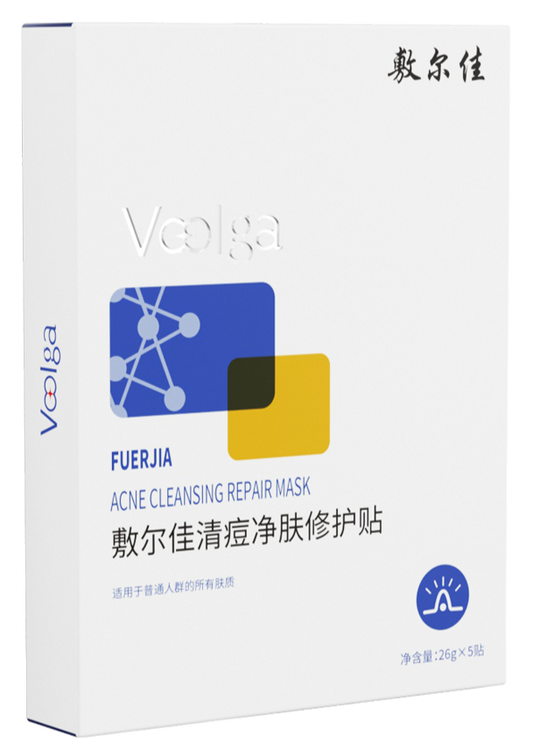
Voolga sells in North America as the exclusive authorized reseller of its masks, which is a narrower claim than it sounds and a more useful one. It means the inventory on the official store came through the brand's own distribution, that batch tracking runs from production to your door, and that a customer with a question has somewhere to ask it. You can read the short version of that arrangement on the Voolga about page.
Here's the detail I'd point to if you're deciding whether that matters. Every Voolga mask carries a printed Best-Before date, and most of the current lineup is dated into 2026. That isn't typical for direct-to-consumer skincare, where shelf life is often vague and a date is optional. Batch-dated inventory is a medical-dressing habit, and it's only possible when a brand knows its own production lots and controls how they move. If you want to see how the dating is presented across the range, browse the sheet-mask collection and compare the labels yourself.
The grey market has its own tell, separate from counterfeiting: dates. A diverted mask is often genuine but old, and old stock is the reason batch dating exists in the first place. I won't make a claim about what an out-of-date mask does on your face, because that isn't my lane. But I can say this plainly: the Best-Before date is part of what you paid for. Buying a dated product outside its window means paying new-product money for old inventory, and that's a value problem you can spot on the box before you open it.
How to Tell If Skincare Is Counterfeit — Where I Start
I check the batch stamp first, before I open anything. It's the fastest signal available and it takes about ten seconds. After that, four more checks, roughly in the order I run them.
Start with the batch code and the Best-Before stamp
The batch code identifies the production lot; the Best-Before date is when the maker expects the product to be at its best. On a legitimate Voolga mask, both are printed, and both should appear consistently across the outer box and the sachet inside. My rule is simple: the code on the box and the code on the sachet have to match. If one is missing, or the two disagree, stop there. That single mismatch is the cheapest test you'll ever run, and it's the one counterfeits and repackaged units fail most often, because the outer carton and the inner unit were never produced together.
Print quality matters too. A batch stamp should be crisp, positioned the same way across units, and legible down to the small digits. A smudged line, a stamp that sits crooked on every box, or a date that looks like it was added by hand are all reasons to slow down. If you're unsure how a Best-Before label is meant to read, this guide to reading sheet-mask dates walks through the format line by line.
Read the packaging and the print
Counterfeit packaging almost always has a tell, and it's rarely the one people check. Forget the logo. Look at the small type. On genuine boxes the ingredient panel is set in even type, the bilingual English-and-Chinese lines are aligned to the same baseline, and the paper stock has a consistent weight and finish. On copies, the small type drifts: a font that's slightly bolder, kerning that's tight in one line and loose in the next, a colour that's half a shade off, or a seal with the wrong texture. Hold the box at an angle in daylight, because registration problems show up there first.
I also read the ingredient list rather than trusting the front of the box, because it's harder to fake consistently and it tells you what you actually have. If you want a method for that, how to read a sheet-mask ingredient list covers the order and what each line is doing. And if a product calls itself medical-grade, it's worth knowing what the term is supposed to mean here. Medical-grade versus regular sheet masks explains the difference without the marketing gloss.
Check the seller, not the product photo
A listing photo proves nothing, because the same image gets reused across a dozen sellers. What I want to know is who's actually accountable. Does the seller name match a business you can find off the platform? Is there a return policy with an address attached to it? Does the brand's own site name that seller? On the Voolga store, product pages carry the batch dating and the authorized-seller positioning, and the account selling is the brand itself, which is the whole point. If the mask you want is part of a recovery routine, the surgery and injury repair collection is the page I'd buy from, not a marketplace clone of it.
Treat price anomalies as a signal
A mask that normally lists between $10.99 and $19.99 turning up at four dollars is not a deal, it's a question. Grey-market and counterfeit sellers compete on a single lever, price, and the discount is the bait. My approach: check the official price first, then treat anything meaningfully below it as a prompt to verify everything else, the batch code, the packaging, the seller. I'd rather pay the listed price for a sodium hyaluronate dressing mask and know what I'm getting than save a few dollars on a box I can't trace. If you're comparing formulas, the 2.0 version sits alongside the original with its own batch dating, and neither should be turning up at a fraction of list.
What to Do If You Suspect Counterfeit Cosmetics
First, don't use it. Not because I'm making a claim about what's inside, I'm not, but because using it tells you nothing and spends your one clean return window. Photograph the box, the sachet, the batch stamp and the listing before you do anything else, because the evidence is what gets a refund and gets a listing removed. Then return it under whatever policy the seller offers. If the seller won't take it, escalate to the platform with those photos attached. Report the listing itself, not just the seller, because the same account will reappear under a new name.
If the product claims to be a Voolga mask, tell the brand. Reports are how an authorized seller finds out which listings are impersonating its inventory, and it's how the next buyer gets warned. The broader playbook for flagging fakes, including which platforms actually act, is in how to spot and stop fake beauty products. And if you have a specific Voolga package in hand and want a step-by-step comparison against the real thing, the Voolga authenticity walkthrough does that with images rather than description.
The Short Version
The reason counterfeit cosmetics keep winning isn't that the copies are good. It's that the checks are boring and almost nobody runs them. A batch code that matches, a Best-Before date that makes sense, small type that's set cleanly, a seller with a name and an address, a price that tracks the official one. Five minutes of looking, and most of the bad listings fall away.
Buying from an authorized seller doesn't make you immune, and I wouldn't pretend otherwise. What it does is give you something to compare against: a known price, a printed batch code, and a company that can answer a question about the box in your hand. That's worth more than a discount that turns out to be the only thing the seller was offering.
This article is for informational purposes about skincare products and ingredients. Voolga makes no claims about the health or medical effects of its products.