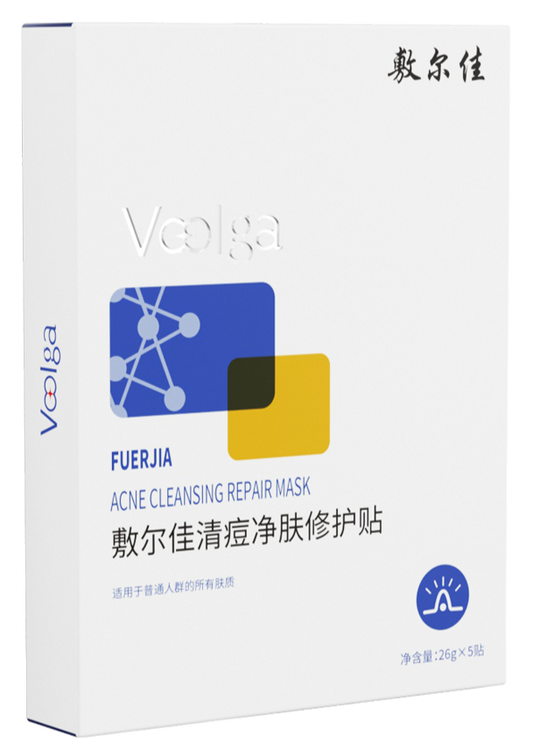
I keep a mental shortlist of botanical extracts that genuinely change how a mask feels on the skin, and over the past few years desert plants have claimed a larger and larger share of it. The reason is structural rather than fashionable. A plant that survives a desert has already solved the problem of holding water and slowing its own evaporation, and those same solutions — stored gel, waxy coatings, resinous films — are precisely what a formulator wants in a mask essence. Voolga's Desert Plants Moisturizing Repair Mask puts seven of them in a single INCI line, and each earns its place differently. This is what each plant is, how it survives where it grows, and what it actually contributes once it is inside a formula. I'll assume you can already read an ingredient list, so I won't retread INCI ordering or the water base. I want to talk about the plants.
What Are Desert Plant Extracts, and Why Formulators Reach for Them
Desert plant extracts are preparations made from the tissues of plants that evolved under extreme water scarcity — leaves, stems, pads, seeds, or resin — captured in a form a formula can use. Formulators reach for them for two reasons that have nothing to do with a marketing story.
The first is water binding. Desert succulents hold water inside gel-like polysaccharides — long-chain sugars that swell and retain moisture — so an extract of that tissue behaves as a humectant and a film-former, giving an essence body and a softer laydown. The second is surface sealing. Desert plants are wrapped in waxy cuticles and phenolic resins that keep water from leaving the leaf, and those same materials act as emollients and light occlusives in a formula, smoothing texture and slowing how quickly a product dries on the face.
The seven species below span the Mojave, the Sonoran, and the Chihuahuan deserts, plus one hardy wildflower of dry, sandy ground. Together they cover the full useful sensory range: gel, slip, cushion, and film.
The Seven Extracts, One at a Time
Evening Primrose (Oenothera biennis)
Evening primrose is the outlier of the group. It is not a desert obligate but a pioneer of dry, sandy, disturbed ground across North America, and it survives there on a fleshy taproot that stores reserves through its first year before the plant bolts and reseeds hard. The name comes from its pale yellow flowers, which open at dusk. On a label it appears as Oenothera Biennis Oil or Extract.
The seed oil is the part formulators want: a light, low-viscosity oil rich in gamma-linolenic acid, an unusual fatty acid that keeps it thin and fast-spreading. In a mask it works as a lightweight emollient — it softens the texture of the essence without adding weight and gives a fine slip rather than the waxy drag of a heavier plant butter. That feel is close to camellia seed oil, another lean, oleic-leaning oil that formulators choose for the same reason: lightness you can feel on contact.
Desert Sand Verbena (Abronia villosa)
Abronia villosa is a low, sprawling native of the sandy stretches of the Mojave and Sonoran deserts and northern Mexico. The species name means hairy, and the plant earns it: leaves and stems are covered in fine glandular hairs. Those hairs are the survival trait. They break up airflow right at the leaf surface, cut water loss, and hold a thin film of moisture against the tissue; the same sticky surface also catches blowing sand, which shelters the young plant.
The extract reads in a formula as a texture modifier more than an active. It contributes a soft, slightly powdery-smooth quality that keeps an essence from finishing glossy, so the surface dries to a matte-adjacent touch. That is a quiet contribution, but it is the kind that changes how a product feels in the last minute of wear.
Century Plant (Agave americana)
Agave americana is the big blue-green rosette — the century plant — native to Mexico and the southwestern United States. It is a succulent with fat, spine-edged leaves, and it runs CAM photosynthesis, a schedule that opens its leaf pores at night to fix carbon and closes them by day, which keeps its water loss near zero in full sun. It blooms once, after decades, sends up a tall stalk, and dies.
The leaf tissue is a reservoir of water bound up in polysaccharides that form a gel. In a formula that gel is a humectant and a film-former: it gives an essence visible body and a smooth, cushiony glide, and leaves a light, flexible film as it dries down. Agave supplies the "body" you feel when a mask essence hugs the sheet instead of dripping off it.
Joshua Tree (Yucca brevifolia)
Yucca brevifolia is the Joshua tree, the tree-sized yucca of the Mojave and a member of the agave family. It survives on two tricks at once: a trunk of fibrous, sponge-like tissue that soaks up rain and releases it slowly, and stiff, waxy, dagger-tipped leaves that lose almost no water. It also runs CAM photosynthesis. On a label it is Yucca Brevifolia Extract.
Yucca's less obvious virtue is chemistry. Its tissues are rich in saponins, natural compounds that bridge oil and water. Saponins give an extract a slippery, faintly soapy slip and help disperse oily ingredients evenly through a water-based essence, so the emollient and gel components stay in a smooth suspension instead of separating in the sheet. That uniformity is the whole point of a mask.
Cochineal Cactus (Opuntia coccinellifera)
Opuntia coccinellifera is a prickly pear — one of the flat-padded cacti of Mexico and the American Southwest. The species name refers to the cochineal insect, which lives on Opuntia and once supplied a deep red dye. The plant's desert solution is the pad itself: thick, water-filled cladodes that swell after rain and shrink in drought, held together and protected by mucilage.
That mucilage is why cactus shows up in masks at all. It is a polysaccharide gel, and it earns its keep twice over: as a humectant that holds water in the formula, and as a film-former that gives a distinctly cushioned, bouncy feel. Of the seven, cactus is the one I would point to for the gel-like weight people notice first. It is the padding in the blend — the reason the essence feels full rather than watery.
Ocotillo (Fouquieria splendens)
Fouquieria splendens is the ocotillo, the whiplike plant of the Sonoran and Chihuahuan deserts that throws up a cluster of long, spiny canes. It survives as a drought-deciduous opportunist: it leafs out within days of rain and drops every leaf the moment the soil dries, leaving green, waxy, photosynthesising stems to carry on.
The stem extract behaves as the lightest of the set. It contributes a thin, quick slip and a lean finish — the kind of ingredient that keeps a blend from tipping out of cushioned and into heavy. Where cactus supplies weight and agave supplies body, ocotillo keeps the whole thing moving across the skin.
Creosote Bush (Larrea tridentata)
Larrea tridentata is the creosote bush, the dominant shrub of the Mojave and Sonoran deserts and one of the most drought-tolerant plants in North America. Its secret is a coating of phenolic resins on small, paired leaves: those resins seal the leaf surface against water loss and make the plant unpalatable to most grazers. After rain the bush releases its signature desert scent, which is the resin volatiles again.
In a formula that resinous character works as an emollient and a light film. Creosote extract leaves a smooth, faintly sealing finish — a breathable skim rather than a heavy occlusion — and it is what gives the blend a cohesive laydown instead of sitting as separate droplets. If there is one ingredient here that tidies the finish, it is this one.
How the Seven Read Together in One Mask
A sheet-mask essence has to do three mechanical jobs at once: hold water in the formula, keep its gel and oil phases together, and dry down to a finish that stays comfortable for the full wearing time. Read against those jobs, the seven botanicals stop looking like a list and start looking like a system. Agave and cactus supply body and cushion; yucca keeps the phases dispersed so the blend stays uniform; evening primrose and ocotillo supply lightness and slip; sand verbena and creosote smooth and seal the finish.
None of the seven is there to headline a claim; they are there to shape feel, and the format is what makes that feel legible. A sheet mask's occlusive seating slows evaporation, so the texture an extract contributes is felt as the essence is pressed in over the wearing time — which is why a balanced blend matters more here than in a rinse-off. For how the sheet material itself changes that sensation, the materials comparison covers the ground. If you want the same gel-and-emollient logic in a lighter water-loving format, the medical sodium hyaluronate dressing repair facial mask is the comparison I would draw, and the ectoin night repair mask is a stretchier sheet whose cling you can feel against the gel-and-emollient body of this blend.
Desert Plant Skincare: Questions I Get Asked
What are desert plant extracts?
They are preparations made from the water-holding tissues of plants that evolved under extreme water scarcity — leaves, stems, pads, seeds, or resin — captured in a form a formula can use. Their value in a product comes from the same traits that let the plant survive: polysaccharide gels that bind water, and waxy or resinous coatings that act as emollients and light film-formers.
Why would a formulator use seven in one mask?
Because the jobs are different. A single blend still has to hold water, keep its phases suspended, spread evenly, and dry to a comfortable finish. Agave and cactus add body, yucca keeps the phases together, evening primrose and ocotillo add slip, and sand verbena and creosote smooth the finish. No single extract covers all of that well.
Do desert plant extracts feel different from standard botanical extracts?
They tend to feel gel-like and cushioned rather than merely watery. That comes from the polysaccharide mucilage in succulent tissue and from the waxy, resinous coatings on desert leaves. If you are used to the thin feel of a water-loving humectant such as hyaluronic acid in a mask, the difference is one of weight and body rather than of basic function.
Is any single one of the seven more important than the others?
No — they are doing separate jobs, and the blend is the point. If I had to name the one that most changes the reason people describe a mask as "cushiony," it would be the cactus mucilage, but it only reads that way because the others are holding the rest of the system in place. For reactive skin, I would still check the full formula rather than the plant list alone; the sensitive skin soothing range is the gentler starting point if you are comparing.
If the plant list is what brought you here, it is worth reading the seven as a texture system rather than as a list of headlines. Each contributes something measurable to how a product feels — body, slip, suspension, film — and that is the whole value of putting desert plants in a mask. You can see the same ingredient-forward approach across the rest of the Voolga range, and the ingredient-list guide is the right companion if you want to read the next label the same way I read this one.
This article is for informational purposes about skincare products and ingredients. Voolga makes no claims about the health or medical effects of its products.