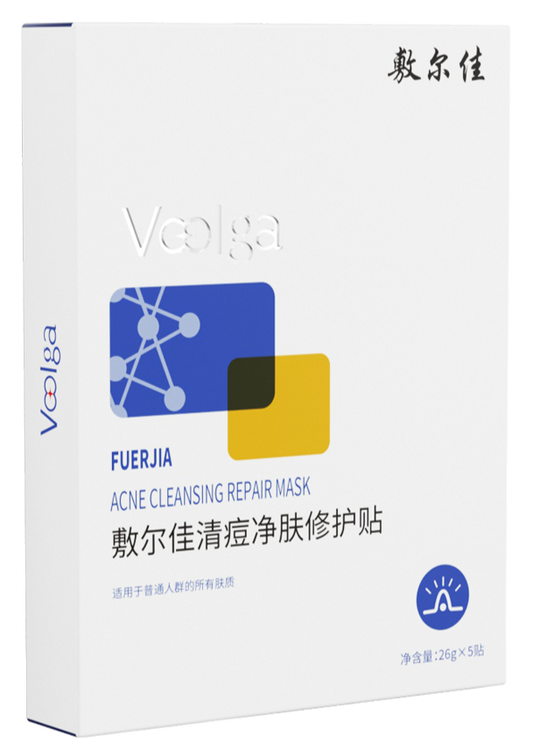
I have a confession that would get me booed off a beauty forum: I keep both kinds of sheet mask in my bathroom. Not as a closet-snob thing — I genuinely reach for different formats on different evenings. But the question people actually ask me, every time the word "medical" shows up, is whether the expensive one is secretly the same as the drugstore one with a fancier label. Here's my honest answer: the difference is real, and it lives in three places — how it's made, what format it comes in, and what's on the label.
This article is for informational purposes about skincare products and ingredients. Voolga makes no claims about the health or medical effects of its products.
What "Medical Grade" Actually Means
The short version, stated carefully: "medical grade" is not a regulated cosmetic term. Anyone can print it on a box. What it is, in honest practice, is a promise about manufacturing — tighter batch tracking, dated product, simpler and more carefully chosen ingredients — and, in our case, a format borrowed from clinical dressings: sheets that cling and don't drip. When we say a mask is built on medical dressing technology, that's what we mean, and our About Us page says the same thing in plainer words.
Start with what it doesn't mean: it doesn't mean a product is medicine, and it doesn't mean the label carries a government seal of approval. Cosmetic regulation simply has no official "medical grade" tier that a brand can apply for. That's the honest part. What the phrase does in the real world is signal manufacturing discipline: ingredients chosen with restraint, a formula kept short, a batch numbered and dated so the maker can stand behind it. For us it also means a sheet designed like a dressing — dense, clingy, flat against the face — rather than a flimsy cloth.
How It's Made: Batch Tracking and Best Before
The clearest difference is on the packet, not the product. Most cosmetic masks arrive undated; you couldn't tell a March batch from an August one if your life depended on it. Dressing-style masks carry what we call a Best Before stamp — ours say things like "Best Before 2026.9.20" — because the maker treats each fill as a batch with a window. That date isn't about safety theater; it's about quality control. If a formula is guaranteed only as far as its best state, the maker tracks the batch, and the tracking shows up on the label.
I'll be straight with you: a Best Before date asks you to trust a process you can't see. That's fair — you should. So here's what the process looks like: each production run gets a number, each number gets a formula check, and the product you open is accountable to that record. When you see the same stamp on three masks you bought months apart, you're holding evidence that someone is keeping track. That, more than any buzzword, is the manufacturing story behind the word "medical." If you want the fuller version of how to treat those packets at home, our storage guide explains what the date means for how you keep them.
The Format Difference: Dressing Sheets vs. Cotton
The format is where your face feels the difference within seconds. A typical cosmetic mask is cotton or a thin non-woven cloth soaked in serum — light, cheap to print, quick to dry at the edges. A dressing-style mask is built like a gel bandage: denser, heavier, and engineered to cling. Hydrogel and bio-cellulose versions lie on the skin the way a sheet of glass lies on a table — no bubbles, no drips, no constant smoothing. Cotton masks are fine; they're just a different physics.
I feel the difference most around the jawline. A cloth mask lifts at the chin the minute I talk, so I sit still and hold it down like a napkin. Our white sodium hyaluronate mask is a middle-ground dressing — thin enough to forget, clingy enough to stay. The black mask 2.0 is the full experience: a thick gel sheet that seals edge to edge, stays cool for the whole session, and comes off in one clean piece. If you've only ever known the cotton version of masking, the 2.0 will feel like a different product entirely — because in format terms, it is.
The Formula Difference: Shorter, Cleaner, Fragrance-Free
Then there's the ingredient list, and this is where "medical grade" earns its keep. Dressing-style masks tend to carry short lists built around a few known ingredients — sodium hyaluronate, centella asiatica, ectoin, ceramides — instead of a long menu of fragrance compounds, colorants, and botanical extras. Fragrance is the big one: a clinical dressing philosophy leaves it out, because scent is the most easily skipped part of a formula. So a medical-style mask is usually formulated without fragrance and often designed for sensitive skin. Our sensitive-skin collection gathers the ones that lean that way.
A short list is easier to read and easier to judge, and that's a feature, not a deficiency. When there are twelve ingredients instead of forty, each one has to justify its place. If you want practice deciding what belongs on a good list, our guide to reading a sheet mask ingredient list walks through it line by line — the opening water, the humectant, the actives, the end-of-list stuff.
The Price Difference
Here's the trade you're actually making, in dollars. Our masks run from about $10.99 to $19.99 each, which puts them above the dollar-a-mask drugstore rack and well below prestige clinical brands that charge upwards of $30 for single units. What you're buying is the dressing format, the batch dating, and the ingredient restraint — all the things above that cost money to do and show up only subtly on the label. Is it worth the difference? That's your call, and I'd rather you make it with your eyes open. Mass-market masks are perfectly functional; they're just built to a different spec.
And because we sell direct, a few practical guardrails come standard: free US shipping over $50 and a 30-day easy return window. So the gamble on a more expensive mask is a small one — worst case, you've tried the format and sent it back. That's the kind of confidence you only offer when the manufacturing story holds up, and it's the same confidence we're asking you to apply to any "medical grade" label you meet elsewhere.
The Differences, Side by Side
| Axis | Dressing-style (medical) | Regular cosmetic |
|---|---|---|
| What "medical grade" means | Quality and manufacturing marker, not a regulated term | Marketing word with no fixed definition |
| Sheet format | Dense gel (hydrogel or bio-cellulose); clings flat, doesn't drip | Light cloth; dries at the edges |
| Ingredient list | Short; fragrance-free; few familiar actives | Longer; often fragranced |
| Batch tracking | Numbered runs; Best Before stamp | Usually undated |
| Typical price | About $10.99–$19.99 per mask | Varies widely; often lower |
Read the table as truth, not as a recommendation. Both formats have their place — I own both. The column you pick depends on the evening you're planning, not on which one is "better." Our whole sheet-mask collection sits on the dressing side of that line, and it's worth knowing that's a deliberate choice, not a coincidence.
Frequently Asked Questions
What does medical grade mean on a skincare label?
In honest terms, it's a quality marker, not a regulated designation — cosmetic law doesn't define "medical grade," so treat the phrase as a manufacturing promise. For Voolga it means clinical dressing technology and batch-tracked manufacturing: sheets built like gel dressings, short fragrance-free formulas, numbered runs with Best Before dates. When you see "medical grade" elsewhere, the useful question is what evidence of that promise you can find on the packet.
Are medical grade masks more expensive?
Usually, yes, and the honest reason is that the format costs more to make: denser gel sheets, tighter quality control, batch dating, shorter runs. Ours sit from about $10.99 to $19.99 per mask, which is real money compared with dollar-store cloth — but it's also well under the clinical-brand prices you'll see at some derm-adjacent counters. You're paying for how it's made, and you can verify that on the packet.
Why does my mask have a Best Before date?
Because the formula was filled as a dated batch. The stamp marks the window in which the maker stands behind the sheet at its best — texture, cling, and serum feel. It's the same discipline a food brand applies to a perishable product, applied to skincare. Store the packet somewhere cool and dry, and treat the date as the quality marker it is — our storage guide covers the rest.
The Bottom Line
Here's the cleanest way to hold all this: "medical grade" is a manufacturing story, not a miracle claim. It asks you to notice how a thing is made — batch-dated, short-listed, dressing-formatted — and to price it accordingly. When you find a brand that documents that story on the packet, like we try to on ours, you're reading a transparency signal as much as a label. Start anywhere: the white mask, the black mask 2.0, or the whole sheet-mask collection, and read the packet before you judge. That's the whole difference, honestly told.
This article is for informational purposes about skincare products and ingredients. Voolga makes no claims about the health or medical effects of its products.