Two Masks, Two Philosophies
I have a confession: for years, I was a sheet mask purist. The convenience, the individually packaged doses, the 15 minutes of enforced stillness — it suited my routine perfectly. Mud masks felt like a relic from an earlier era of skincare, something you'd find in a spa, not a bathroom cabinet. Then a friend handed me a charcoal mud mask and said, "Just try it on a Sunday."
That Sunday changed my perspective. Not because the mud mask was better than my sheet masks — it wasn't, exactly. It was different. The experience of applying something with my fingers, feeling the texture change as it dried, and then washing it off felt like a completely different practice from unfolding a pre-soaked sheet. And the charcoal — that dark, earthy, mineral quality — was unlike anything I'd encountered in a sheet mask essence.
I've been using both formats ever since. And the more I compare them, the more I think the question isn't which is better — it's which is better for what you're doing right now. Let me break down how they actually compare.
The Charcoal Mud Mask: A Wash-Off Experience
The Voolga Charcoal Oil-Control Black Mud Mask is what I'd call a "process mask." The experience is as much about the application and removal as it is about wearing it. Here's what the process looks like:
You start with a jar of dark, earthy-smelling paste. The charcoal gives it a deep black color, and the mud base gives it a dense, almost clay-like texture. I scoop out about a tablespoon with clean fingers or a spatula, and spread it across my face in an even layer. It goes on thick — you're not aiming for a sheer film, you're aiming for visible coverage.
As it sits, the mask changes. It goes from wet and glossy to matte and dry, usually within 10 to 15 minutes. You can feel the tightening — not uncomfortably, but noticeably. The mud is doing what mud does: drying, contracting, creating a physical sensation on the skin. I find this phase satisfying in a way that sheet masks aren't. There's something about the transformation from wet paste to dry mask that feels substantive, like you can feel the process happening.
Removal is where the mud mask demands more effort than a sheet. I rinse with warm water, massaging in circular motions to loosen the dried mask. The charcoal gives the water a gray tint as it washes away. It takes a couple of minutes to fully remove — this isn't a peel-and-done situation. After rinsing, my skin feels clean in a way that's distinct from the post-sheet-mask feeling. The sheet mask leaves a layer of essence; the mud mask leaves nothing but clean skin.
What's in it
The formulation is built around charcoal and mineral-rich mud. Charcoal is a form of carbon that's been processed to increase its surface area — in skincare, it's used for its physical properties as a fine, dark powder that's incorporated into the mud base. The mud itself is mineral-rich, and the Voolga formulation uses what they describe as "magnetic principle technology" — a formulation approach designed to lift away impurities during the rinse-off process.
I'm not going to claim what this does to your skin medically — I'm describing what it's formulated with and what the experience is like. If you want to explore more products in this category, the mud mask collection has options.
The Lactic Acid Sheet Mask: A Leave-On Experience
On the other side of the comparison is the Voolga Lactic Acid Oil Control and Astringent Mask. This is the sheet mask approach to oil control — and it's a completely different experience.
The mask comes individually packaged, pre-soaked in essence. You unfold it, place it on your face, and sit still for 15 to 20 minutes. There's no application process with your fingers, no watching a texture change, no rinsing. The mask does its thing while you do nothing — or more accurately, while you sit and exist quietly for 15 minutes.
The essence is formulated with lactic acid, which is an alpha-hydroxy acid (AHA). Lactic acid is water-soluble, and in a sheet mask format, it's delivered in a pre-formulated essence alongside other ingredients. The sheet material holds the essence against the skin in an occlusive layer for the duration of the masking session. When you remove the sheet, you pat in the remaining essence and leave it — no rinsing.
I find the sheet mask experience more meditative than the mud mask. There's less to do, which means more space to just be. I can read, listen to music, or close my eyes. The mud mask demands engagement — application, monitoring, removal — while the sheet mask demands stillness. If you want to understand more about how lactic acid works in mask format, our guide to lactic acid face masks goes deeper.
Side-by-Side: How They Actually Compare
| Feature | Charcoal Mud Mask | Lactic Acid Sheet Mask |
|---|---|---|
| Format | Wash-off paste in a jar | Pre-soaked sheet, individually packaged |
| Application time | 2–3 min to apply, 10–15 min to wear, 2–3 min to rinse | 30 seconds to apply, 15–20 min to wear, no rinse |
| Key ingredients | Charcoal, mineral-rich mud | Lactic acid (AHA), astringent essence |
| Texture | Dense, earthy paste that dries to a matte finish | Thin, wet sheet with lightweight essence |
| Mess factor | Higher — paste gets on fingers, sink, towels | Low — unfold, place, dispose |
| Price | $9.99 (compare-at $19.99) | $10.99 |
| Portability | Low — jar format, not travel-friendly | High — flat packet, perfect for travel |
| Skin feel after | Clean, matte, nothing left on skin | Essence pat in, slight tackiness that absorbs |
| Best for | Sunday evenings, dedicated masking sessions | Midweek quick sessions, travel, lazy evenings |
When I Choose Each One
Here's how I actually use both in my weekly routine:
Sunday evenings are my mud mask time. I've got time, I'm already in wind-down mode, and I don't mind spending 20 minutes on the full apply-wear-rinse cycle. The mud mask feels like a reset — a deliberate, hands-on practice that signals the end of the weekend and the start of a new week. I'll often follow it with a hydrating sheet mask afterward, giving my skin a clean base for the hydration step.
Wednesday evenings are my sheet mask time. It's the middle of the week, I'm tired, and the idea of washing mud off my face sounds like too much effort. A sheet mask is the path of least resistance — unfold, place, sit, remove, pat. Done in 20 minutes with almost no cleanup.
Travel days are always sheet masks. I can pack five flat packets in the space a single mud mask jar would take. Hotel sinks are awkward for mud mask removal. Sheet masks are designed for exactly this scenario.
Lazy mornings — occasionally, if I have a free Saturday morning, I'll do a mud mask while I make coffee and read. The drying time aligns with a slow morning pace. Sheet masks don't work for this because I'd have to sit still, and on a Saturday morning I want to move around.
If you're building a weekly rotation, our summer sheet mask rotation guide covers how to structure multiple masks across a week. The mud mask fits naturally as the "Sunday reset" step in that kind of rotation.
Can You Use Both in the Same Session?
I do this sometimes — mud mask first, sheet mask second. The mud mask gives me clean, bare skin (since it rinses off completely), and then I follow with a hydrating sheet mask to add moisture back. It's a two-step process that takes about 35 minutes total, so I reserve it for evenings when I have the time and inclination.
I wouldn't do it the other way around — sheet mask first, then mud — because the sheet mask leaves essence on the skin that would interfere with the mud mask's application. The mud mask needs clean skin to adhere properly.
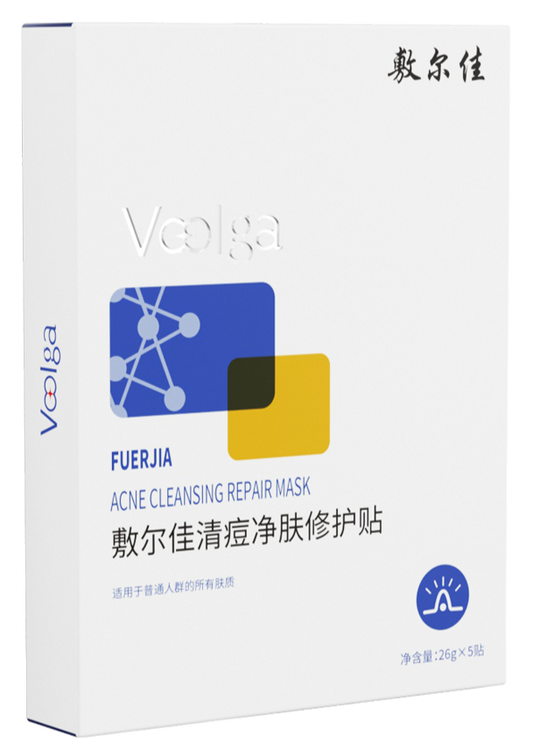
If you're dealing with acne-prone skin, you might also consider the Voolga Acne Cleansing Repair Mask as a third option in the rotation. Our acne control collection has several formats designed for acne-prone and oily skin types.
Price and Value Comparison
At $9.99 for the charcoal mud mask and $10.99 for the lactic acid sheet mask, both are in the same price tier. The mud mask is a multi-use jar — depending on how much you apply per session, you might get 8 to 12 uses from a single jar. The sheet masks are typically sold per-piece or in boxes, so each use is a fixed cost.
Per-use cost works out similarly for both. The real difference isn't financial — it's experiential. The mud mask is a process; the sheet mask is a pause. Both are worth the price if they fit your routine. Browse the full product lineup or the sheet mask collection to see all options.
Frequently Asked Questions
Which is better for oily skin: mud mask or sheet mask?
I use both for oily skin, but at different times. The mud mask gives me a deeper clean feeling — the rinse-off process removes everything from the skin's surface. The sheet mask delivers a formulated essence in a convenient format. I don't think one is objectively better; it depends on whether you want a process (mud) or a pause (sheet) on any given day.
Can I use a charcoal mud mask and a sheet mask on the same day?
Yes — I do mud first, then sheet. The mud mask rinses off completely, leaving clean skin, and then the sheet mask delivers a hydrating or formulated essence on that clean base. I wouldn't reverse the order, as the sheet mask's residue would interfere with mud mask application.
How often should I use a charcoal mud mask?
I use mine once a week, typically on Sunday evening. The mud mask is a more involved process than a sheet mask, and I find once a week is the right cadence for my routine. Your frequency may vary depending on your skin type and schedule.
Does the charcoal mud mask stain towels or sinks?
The charcoal gives the mask a deep black color, and the rinse water does run gray. I haven't had issues with staining — the charcoal washes away cleanly with warm water — but I do use a dark towel when I mud mask, just as a precaution. Rinse your sink thoroughly after removal.
Can I travel with a charcoal mud mask?
The jar format makes mud masks less travel-friendly than sheet masks. If you're checking a bag, the jar is fine. For carry-on travel, the jar size may exceed liquid restrictions depending on the volume. Sheet masks are the better choice for travel — flat, lightweight, and individually packaged.
This article is for informational purposes about skincare products and ingredients. Voolga makes no claims about the health or medical effects of its products.