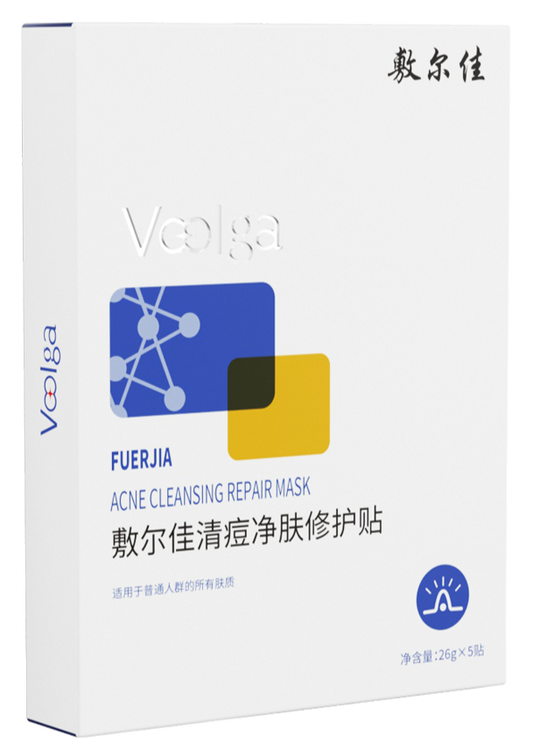
What "Hyaluronic Acid" on a Label Actually Means
If you have ever stood in a skincare aisle reading ingredient lists, you have probably noticed that some products say "hyaluronic acid" and others say "sodium hyaluronate." Most people assume the difference is cosmetic — a synonym, a marketing choice, or a translation variation. It is none of those things. The distinction between these two terms tells you about the molecular form, the manufacturing grade, the molecular weight, and ultimately how effectively the ingredient will reach the layers of your skin where it actually does something.
Hyaluronic acid is one of the most studied molecules in dermatology. A glycosaminoglycan — a long, unbranched sugar chain — it occurs naturally in your skin, where it holds water, fills the extracellular matrix between collagen and elastin fibers, and maintains the tissue turgor that keeps skin firm. A single gram of hyaluronic acid can hold up to six liters of water. By the time you are 50, your skin has lost roughly half its natural hyaluronic acid content, which is one reason mature skin looks thinner, drier, and less resilient (Papakonstantinou, Roth, & Karakiulakis, 2012).
But "hyaluronic acid" on a label is not one thing. It is a category that contains molecules of different sizes, different salt forms, and different manufacturing purities — and those differences determine whether the ingredient sits on your skin's surface giving a temporary plump or actually reaches the deeper layers where it can support repair. Here is what those differences mean, and why the medical-grade dressing format that Voolga uses changes the equation entirely.
Sodium Hyaluronate vs Hyaluronic Acid: The Chemistry
The Salt Form Difference
Hyaluronic acid (HA) in its free acid form is a very large molecule — typically 1 to 3 million Daltons — and it is unstable in water-based solution. It degrades, loses viscosity, and provides an environment where bacteria can grow. This makes it difficult to formulate into a stable skincare product with a reasonable shelf life.
Sodium hyaluronate (NaHA) is the sodium salt of hyaluronic acid. By converting the free acid to its sodium salt, chemists produce a molecule that is smaller, more water-soluble, more stable across temperature and pH ranges, and less prone to microbial contamination (Salwowska et al., 2016). In practice, most skincare products that list "hyaluronic acid" on their front label actually contain sodium hyaluronate in their formula — because the salt form is what you can actually put in a bottle and expect to work six months later.
This is not a secret the industry is hiding. It is basic formulation chemistry. But it means that when you see "hyaluronic acid" on a cosmetic label, you are usually getting sodium hyaluronate — and the more useful question is not "acid or salt?" but "what molecular weight, and what manufacturing grade?"
Molecular Weight: The Variable That Determines Everything
If the salt form is the first distinction, molecular weight is the one that actually determines what the ingredient does to your skin. Hyaluronic acid / sodium hyaluronate is manufactured in different molecular weight (MW) fractions, and each fraction behaves fundamentally differently when applied topically.
| Molecular Weight | Size (Daltons) | What It Does |
|---|---|---|
| High MW | 1,000–2,000 kDa | Stays on the skin surface. Forms a hydrating film, provides immediate plumping, reduces transepidermal water loss. Cannot penetrate the stratum corneum. |
| Medium MW | 100–500 kDa | Penetrates into the mid-epidermis. Provides sustained hydration below the surface and supports the lipid lamellae that form the moisture barrier. |
| Low MW | 5–50 kDa | Reaches deeper epidermal layers. Triggers inflammatory signaling modulation and supports fibroblast activity — the repair-signaling level rather than the hydration level. |
The clinical study by Pavicic et al. (2011) demonstrated this directly: a cream containing three specific NaHA molecular weight fractions (high, medium, and low) produced measurably better anti-wrinkle efficacy than any single fraction alone, with reduced wrinkle depth and improved skin elasticity after eight weeks. The combination matters because each fraction addresses a different layer and a different function — surface hydration, mid-epidermal moisture, and deep repair signaling.
Most cosmetic HA serums do not specify their molecular weight fraction. When a label says simply "hyaluronic acid 2%" without telling you the MW, you are getting an unspecified fraction — likely a single high-MW batch that provides surface plumping but does not reach the layers where repair happens. Medical-grade sodium hyaluronate dressings, by contrast, are formulated with controlled MW fractions selected for clinical efficacy — the same fractions validated in wound-healing research.
Why Medical-Grade Sodium Hyaluronate Is Different
The gap between cosmetic-grade and medical-grade sodium hyaluronate is not subtle. It is the difference between an ingredient manufactured in a cosmetic facility with minimal quality controls and one manufactured to pharmaceutical standards with clinical traceability.
Medical-grade NaHA is produced under the following conditions:
- Controlled molecular weight. The manufacturing process selects for specific MW fractions — typically a blend of high, medium, and low — optimized for the intended clinical application. For wound dressings, this means fractions that both hydrate the surface and reach the deeper layers where tissue repair is active.
- Sterile manufacturing. Medical-grade NaHA is produced in controlled cleanroom environments and packaged in sterile, sealed materials. This is critical because sodium hyaluronate is a biological molecule that can support microbial growth if contamination occurs. Cosmetic-grade HA is produced in standard cosmetic facilities where sterility is not guaranteed.
- Clinical batch tracking. Every production run is assigned a batch number and a stability-validated expiration date. This is why Voolga masks carry Best Before dates — they are not marketing flourishes. They are pharmaceutical-grade quality control: the date after which the active ingredient concentration and sterile packaging integrity can no longer be guaranteed.
- Pharmaceutical-grade purity. Medical-grade NaHA is purified to remove endotoxins, residual proteins, and metal ions that can cause irritation or degradation. The purity standard is higher than what cosmetic regulations require.
Price et al. (2007), in a comprehensive review of hyaluronic acid's clinical applications, noted that the molecule's efficacy in both wound healing and dermatology depends heavily on grade and formulation — the same molecule produced to different standards produces different clinical outcomes. The manufacturing grade is not a footnote; it is a determinant of whether the product works.
The Dressing Technology: Why Format Matters
Even with the right molecular weight and the right manufacturing grade, the ingredient still has to reach your skin in a format that delivers it effectively. This is where the gap between a sodium hyaluronate serum and a sodium hyaluronate medical dressing becomes decisive.
A serum is applied in seconds, spreads across the skin, and begins evaporating immediately. The active ingredient has a contact window of perhaps a few minutes before it is absorbed, evaporated, or transferred to whatever surface your face touches next. For a large molecule like NaHA — especially the high-MW fractions that cannot penetrate the stratum corneum unaided — that brief contact window means most of the ingredient sits on the surface, gives a momentary plump, and is gone.
Voolga's masks use a fundamentally different delivery system. The Medical Sodium Hyaluronate Dressing Repair Facial Mask (White Mask) is built on a non-woven fabric substrate — the same type of material used in clinical wound dressings — saturated with a NaHA solution formulated with carbomer 940, a gelling agent that creates a controlled-release matrix. Here is what that format does:
- Sustained occlusive contact. The mask seals the skin surface for 15–20 minutes. The NaHA stays in continuous, uninterrupted contact with the stratum corneum instead of evaporating. The absorption window stretches from minutes to nearly half an hour — a 5–10x increase in contact time.
- Stratum corneum hydration. Occlusion increases the water content of the outermost skin layer, causing corneocytes to swell slightly and open the intercellular lipid pathways that NaHA travels through. This is the same physical principle that makes hydrocolloid wound dressings effective — the barrier becomes more permeable under hydration.
- Controlled release. The carbomer 940 matrix holds the NaHA solution against the skin at a controlled rate rather than letting it run off. The gel structure ensures the active is delivered gradually over the wear period rather than in a single brief pulse.
- Temperature retention. The sealed mask traps approximately 1–2°C of body heat against the skin, which slightly fluidizes the intercellular lipid bilayers and increases molecular motion — a recognized technique in transdermal delivery research.
These are not marketing claims. They are established physical principles from wound-care science, and they are the reason sodium hyaluronate dressings are used in clinical settings for burn treatment, post-laser recovery, and wound management rather than serums. The dressing format solves the delivery problem that limits every topical HA product.
What the Research Shows: NaHA in Wound Healing and Skin Repair
The medical literature on sodium hyaluronate is extensive because the molecule has been used in clinical wound care for decades — long before it became a skincare ingredient. The same properties that make it effective in burn treatment and post-surgical repair make it superior for everyday skin maintenance.
Several key findings from the research base are directly relevant to skincare:
- Wound healing acceleration. Sodium hyaluronate dressings have been shown to accelerate re-epithelialization in partial-thickness wounds and burns. The molecule creates a moist wound environment that supports keratinocyte migration — the process by which new skin cells travel across a wound surface to close it. This is the same cell migration process that occurs, more slowly, in everyday barrier maintenance.
- Anti-inflammatory signaling. Low-MW hyaluronate fragments (under 50 kDa) act as signaling molecules that modulate the inflammatory response. They interact with cell-surface receptors like CD44 and TLR-2/4 to regulate cytokine production — reducing chronic low-grade inflammation that drives aging and barrier degradation. This is the repair-signaling level that surface-only HA serums cannot reach.
- Post-procedure recovery. Clinical studies on NaHA dressings following laser resurfacing, chemical peels, and microneedling consistently show faster re-epithelialization, reduced erythema (redness), and lower rates of post-inflammatory hyperpigmentation compared to standard wound care. The dressing format keeps the wound bed hydrated and delivers NaHA continuously during the critical first 48–72 hours of repair.
- Barrier repair in dermatitis. Sodium hyaluronate has demonstrated efficacy in improving barrier function in atopic dermatitis and contact dermatitis, reducing transepidermal water loss and supporting the restoration of the lipid lamellae that form the skin's protective seal.
Price et al. (2007) surveyed the full range of HA clinical applications — from ophthalmology to orthopedics to dermatology — and concluded that the molecule's efficacy depends on three factors: molecular weight selection, formulation grade, and delivery method. Get all three right and you have a clinically validated repair agent. Get any one wrong and you have a hydrating serum that sits on the surface.
How to Choose the Right Sodium Hyaluronate Product
Given everything above, here is a practical framework for evaluating any hyaluronic acid or sodium hyaluronate product:
- Check whether the label specifies molecular weight. If it does not, you are getting an unspecified fraction — likely a single high-MW batch that provides surface plumping but limited deeper benefit. Products that list multiple MW fractions are delivering at multiple skin depths.
- Look for medical-grade or pharmaceutical-grade manufacturing. Clinical batch tracking, sterile packaging, and expiration dating are indicators of pharmaceutical-grade production. If a product carries a Best Before date, it was manufactured to clinical standards. If it does not, it was not.
- Prefer dressing format over serum format for barrier repair. A serum provides surface hydration. A medical dressing provides sustained contact, deeper penetration, and the controlled-release delivery that makes NaHA effective at the repair level. For daily lightweight hydration, a Sodium Hyaluronate Repair Solution works well. For intensive barrier repair and recovery, the dressing mask format is superior.
- Prioritize the salt form. Sodium hyaluronate is more stable, more soluble, and more practical than free HA. If a product genuinely uses free HA (rare), check its stability and preservation system carefully.
- Consider complementary ingredients. NaHA pairs effectively with centella asiatica for inflammation control (the Centella Asiatica Soothing Mask uses complementary soothing actives) and with ceramides for lipid barrier repair. Browse the Sensitive Skin Soothing collection for formulations designed for reactive and barrier-compromised skin.
The Sheet Mask collection includes the full range of Voolga's medical dressing masks, each formulated with pharmaceutical-grade NaHA and clinical batch tracking.
The Voolga Difference: Medical Dressing Heritage
Voolga's masks are not cosmetics that borrowed the word "medical" for marketing. They originate from medical dressing technology — the same non-woven fabric substrates, carbomer-based gel matrices, and pharmaceutical-grade sodium hyaluronate used in clinical wound care. The White Mask, formally named the Medical Sodium Hyaluronate Dressing Repair Facial Mask, is classified as a medical dressing. That classification carries specific manufacturing requirements that cosmetic products are not held to: sterile production, batch tracking, stability testing, and expiration dating.
When you see a Best Before date on a Voolga mask — 2026.9.20 on the White Mask, 2026.12.29 on the Black Mask 2.0 — that is clinical batch tracking in action. Each production run was stability-tested to a specific date, and the active ingredient concentration is guaranteed only until that date. Most cosmetic skincare products do not carry this dating because they are not required to, and because their manufacturing process does not include the stability validation that clinical batch tracking demands.
The non-woven fabric substrate is the same material used in clinical wound dressings — designed to hold a gel matrix against a wound site in sustained contact without adhering to the healing tissue. In a skincare context, that means the mask holds the NaHA solution against your skin for 15–20 minutes of uninterrupted delivery, then lifts away cleanly without disrupting the barrier it was working to repair.
This is the difference that matters. Not the ingredient name on the label — hyaluronic acid, sodium hyaluronate, whatever the marketing team chose — but the molecular weight, the manufacturing grade, and the delivery format that determine whether the ingredient actually reaches the layer of your skin where it can do something beyond a temporary surface plump.
Frequently Asked Questions
Is sodium hyaluronate the same as hyaluronic acid?
No, but they are closely related. Hyaluronic acid (HA) is the free acid form — a large molecule that is unstable in water-based solutions. Sodium hyaluronate (NaHA) is the sodium salt form of the same molecule — smaller, more stable, and more water-soluble. Most skincare products labeled "hyaluronic acid" actually contain sodium hyaluronate because it is more practical to formulate. The two terms are often used interchangeably on packaging, but the salt form determines stability, penetration, and shelf life.
What molecular weight of hyaluronic acid is best for skin?
Different molecular weights serve different purposes. High molecular weight HA (1,000–2,000 kDa) stays on the surface and provides immediate plumping and barrier protection. Medium molecular weight (100–500 kDa) penetrates to the mid-epidermis for sustained hydration. Low molecular weight (5–50 kDa) reaches deeper skin layers and supports repair signaling. Medical-grade dressings typically use a combination of fractions to deliver both surface and deeper benefits. Single-MW cosmetic serums that don't specify their fraction are delivering only one layer of the story.
What makes medical-grade sodium hyaluronate different from cosmetic hyaluronic acid?
Medical-grade sodium hyaluronate is manufactured to pharmaceutical standards: controlled molecular weight fractions, sterile production environments, clinical batch tracking with expiration dating, and non-woven fabric substrates designed for sustained wound-site contact. Cosmetic hyaluronic acid serums are produced to cosmetic-grade standards with unspecified molecular weight ranges, non-sterile manufacturing, and no batch tracking. The clinical standards ensure consistency, safety, and efficacy that cosmetic-grade products are not required to meet.
Can I use sodium hyaluronate every day?
Yes. Sodium hyaluronate is non-irritating, non-sensitizing, and suitable for daily use on all skin types, including sensitive and post-procedure skin. For clinical-grade sheet masks, 2–3 applications per week provides sustained barrier support. The Sodium Hyaluronate Repair Solution can be used daily as a lightweight hydrating step. Because NaHA works by attracting and holding water rather than chemically stimulating cells, there is no irritation curve or adaptation period needed.
Why do Voolga masks have "Best Before" dates?
Voolga masks carry Best Before dates because they are manufactured as medical dressings, not cosmetics. Clinical batch tracking requires that each production run carry an expiration date tied to stability testing — the date after which the active ingredient concentration and sterile packaging can no longer be guaranteed. This is standard for medical-grade products and reflects pharmaceutical-grade quality control. Most cosmetic skincare products do not carry this dating because they are not held to the same manufacturing standards.
By the Voolga Skincare Editorial Team. References: Price RD, Berry MG, Navsaria HA. Hyaluronic acid: the scientific and clinical evidence. J Plast Reconstr Aesthet Surg. 2007;60(10):1110-1119 (PMID: 17485130). | Pavicic T, Gauglitz GG, Lersch P, et al. Efficacy of cream-based novel formulations of hyaluronic acid of different molecular weights in anti-wrinkle treatment. J Drugs Dermatol. 2011;10(5):490-500 (PMID: 21904203). | Papakonstantinou E, Roth M, Karakiulakis G. Hyaluronic acid: a key molecule in skin aging. Dermatoendocrinol. 2012;4(3):253-258 (PMID: 23467280). | Salwowska N, Lasoń W, Bebenek K, et al. Physicochemical properties and application of sodium hyaluronate in dermatology. Postepy Dermatol Alergol. 2016;33(3):188-192 (PMID: 27609149).
Disclaimer: This article is for informational purposes only and does not constitute medical advice. Voolga masks are manufactured as medical dressings. Consult a dermatologist before starting any new skincare regimen, particularly if you have active skin conditions, are recovering from a procedure, or are pregnant.