Sheet Mask vs Sleeping Mask: Which One for Your Evening Routine?
By the Voolga team · September 6, 2026
Evening routines are really two different evenings wearing the same pajamas. There's the night you want twenty defined minutes of stillness — a cool, wet layer pressed to your face. Then there's the night you want the routine over in thirty seconds so the last layer can sit on your skin while you sleep. Sheet masks and sleeping masks each belong to one of those moods. Neither format is better; they simply feel, time, and finish differently.
Here's the plain version. A sheet mask is a pre-cut cloth, gel, or bio-cellulose layer soaked in serum, worn 15 to 20 minutes, then lifted off. A sleeping mask — also called an overnight mask — is a leave-on cream or gel applied as the last step and left on while you sleep. The "sheet mask vs sleeping mask" question is really about format, texture, timing, and where each sits in your routine. I reach for a sheet mask on nights when I want a defined 20 minutes, and a sleeping mask when I want something that stays on my skin while I read in bed.
This comparison comes from the team at Voolga — the authorized North American reseller of clinical-grade facial masks — and we've spent plenty of evenings with both formats. The goal is an honest comparison of how each mask works as a format, not a promise about what either one will do to your skin.
This article is for informational purposes about skincare products and ingredients. Voolga makes no claims about the health or medical effects of its products.
What Is a Sheet Mask?
A sheet mask is a single-use, pre-cut layer of cloth, gel, or bio-cellulose, packed damp with serum and sealed in a sachet until you open it. You unfold it, line up the eye and mouth holes, press it over your face, and leave it alone for 15 to 20 minutes. The fabric does the holding. Instead of a serum you keep patting in, the sheet holds the liquid against your skin, which leaves your hands free and your face still.
The material changes how it feels more than people expect. A thin cloth sheet sits light and flexible, easy to smooth flat against the cheeks. A gel sheet has more weight — you feel it on your face the whole time, and it clings to the contours instead of floating. Bio-cellulose is the clingiest of the three; it almost adopts the shape of your face. None of these is the "right" one. They read differently on the skin, and since a mask evening is about feel, the difference matters. If you're new to the format, our guide to applying a sheet mask for the best fit covers the alignment tricks, and the sheet mask collection shows the range.
What Is a Sleeping Mask?
A sleeping mask — frequently called an overnight mask — is the other end of the spectrum. It's a leave-on cream or gel you spread over clean skin as the final step of your evening routine, then go to sleep. No sheet to peel off, no timer. The mask is the layer that stays.
Sleeping mask skincare comes in two broad textures, and the difference matters more than the label. A gel sleeping mask often feels lighter: it spreads thin, cools on contact, and absorbs gradually over the first part of the night. A cream sleeping mask feels richer: it sits heavier on the face, takes longer to settle, and some formulas remain visible as a soft layer on top of the skin until morning. Both are sleeping masks. They just behave differently once applied, which is why I buy textures, not promises.
How They Feel: Texture, Weight, and Temperature
Let me be specific here, because this is the section that decides the debate. A sheet mask is wet, cool, and weighty. When it goes on there's a damp coolness that settles into something comfortable, and you feel the sheet's presence for the entire 20 minutes. It's a sensation you can't ignore — and that's exactly why I reach for it.
A sleeping mask is nearly the opposite. It spreads like a moisturizer, only thicker. A gel version glides on and gradually stops feeling like a mask — after fifteen minutes you might forget it's there. A cream version stays tactile longer; there's a soft layer on top of your skin as you climb into bed. One announces itself for twenty minutes and then leaves; the other disappears quietly, or stays with you through the night. Neither sensation is better. They're just different evenings.
Timing and Finish: 20 Minutes vs. Overnight
Timing is where the two diverge completely. A sheet mask runs on a timer: you put it on, give it 15 to 20 minutes for the serum to sit, and lift it off before the sheet starts to dry. I pat the leftover serum into my skin rather than rinsing, and carry on. The event has a start, a middle, and an end.
A sleeping mask has no timer at all. You apply it, get into bed, and leave it to sit on the skin overnight. The finish is the following morning, and it varies by product: some absorb overnight and you wash your face as usual; others leave a visible layer meant to be rinsed or wiped away. That morning choice is part of why I find the format relaxing: the decision was made the night before.
Where Each One Sits in Your Evening Routine
Routine order is simple once you think in layers:
- A sheet mask goes after cleansing and before moisturizing. Cleanse, lay the sheet on, give it its time, lift it, pat in the leftover serum, then continue your routine. It's a step that happens during the evening.
- A sleeping mask is the final step, full stop. Everything else goes on first. The sleeping mask is the last thing you put on your face before your head hits the pillow.
That ordering isn't arbitrary; it follows the mechanics of the two formats. The sheet is a timed wet layer meant to come off, so it sits mid-routine; the sleeping mask is meant to stay, so it sits on top, where nothing will interrupt it. The same layer logic explains where a serum fits compared to a sheet mask: thinner, quicker steps go early; longer-lasting layers go late.
| Sheet mask | Sleeping mask | |
|---|---|---|
| Format | Pre-cut cloth, gel, or bio-cellulose in serum | Leave-on cream or gel |
| When you wear it | 15–20 minutes, then lifted off | Overnight, as the final layer |
| Feel | Wet, cool, weighty | Spreads and absorbs; some sit on top |
| Finish | Lift, pat in leftover serum, continue | Rinse or not in the morning |
| Routine position | After cleansing, before moisturizer | The last step, right before bed |
Formulation and Skin Types: Read the Texture, Not the Label
The framing I trust is purely about formulation: your skin type doesn't ban a format, it points you at a texture. A gel sleeping mask often feels lighter on the face; a cream one richer and heavier. Oily-skin routines often lean gel for the lighter sensation; dry-skin routines often lean cream for the fuller one. Preferences about comfort and feel — not verdicts about what your skin "needs."
The same reading applies within each format. Sheet masks come in lighter and denser textures, and if the ingredient question is yours, our collagen vs. hyaluronic acid sheet mask comparison walks through how those formulas feel side by side. Across both formats, the buying question stays the same: which texture do you actually want to feel tonight?
How to Choose: Match the Mask to the Evening You're Having
Here's the honest answer to "should I use a sheet mask or a sleeping mask?": the evening decides.
Choose a sheet mask when you want a defined, self-contained ritual. The format has clear edges — apply, wait, remove — so it's perfect for evenings when you can claim 20 minutes of stillness. It's also the pick when you want a cool, wet sensation and a clean ending you can feel happen.
Choose a sleeping mask when you want your routine to end quickly. Spread, sleep, done. There's no removal step and no timer, which makes it the natural choice for late evenings and anyone who wants the last thing on their face to stay there all night.
When you're torn, ask what you want to feel as you close your eyes: something wet and cool for a set 20 minutes, or something creamy settling while you doze. My own choice tracks the day. After a draining one, I want the sleeping mask's simplicity. On a slow weekend night, I want the sheet mask's ceremony.
Using Both: Sheet First, Then the Sleeping Mask
You can absolutely use both, and on a slower evening it's one of my favorite sequences. The order matters: cleanse, sheet on, 20 minutes, lift, pat in the leftover serum — then the sleeping mask as the final layer and into bed.
The reason for that order is practical. A sheet mask is designed to be removed, so it can't sit on top of a layer meant to stay; applied first, the sheet would slide over a cream instead of adhering to skin. Sheet below, sleeping mask above.
I don't stack them every night. Most weeks I alternate — a sheet evening here, a sleeping mask evening there — and keep the double routine for slow weekend nights. If you want that mood to stretch further, our piece on finding stillness in a nighttime skincare ritual pairs naturally with it.
A Night-Focused Mask in the Voolga Lineup
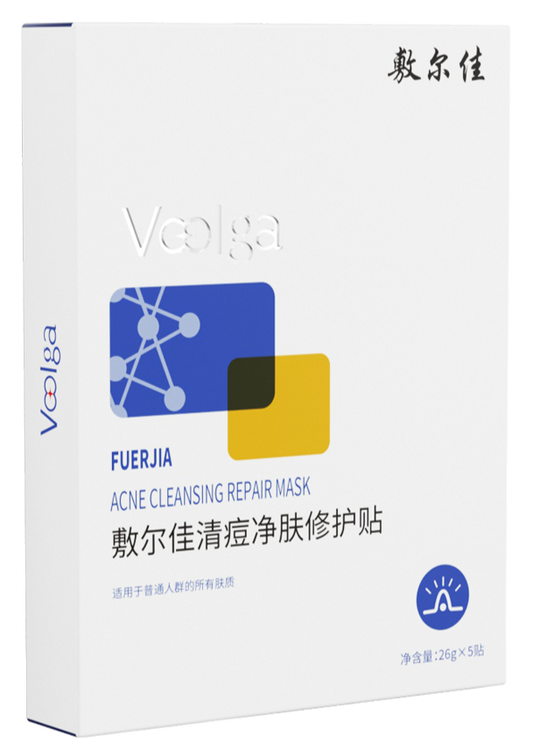
Since we're talking mask formats, one example is worth knowing: the Voolga Ectoin Night Repair Mask. Despite the name, it's a sheet mask — a stretchy nonwoven sheet soaked in 26g of lotion-essence serum, worn for 10 to 20 minutes and then lifted off, the same window we covered above. The texture is the soft-fiber kind: it clings as it settles and feels lighter the longer it sits.
And here's the naming note I'd give anyone reading the label: "Night" tells you where it fits in the day — the evening — and "Repair" is part of the product's name, not a claim about what happens to your skin by morning. You choose it the way you'd choose any sheet mask: by format, texture, and the evening you're planning. For the rest of the range, the full lineup puts it side by side with the other sheet masks.
Frequently Asked Questions
What is a sleeping mask?
A sleeping mask, also called an overnight mask, is a leave-on cream or gel you apply as the last step of your evening routine and keep on while you sleep. Nothing gets lifted off after 20 minutes. The mask is the final layer; in the morning you wash it off or not, per the product's instructions.
Can you use a sheet mask and a sleeping mask together?
Yes. Use the sheet mask first — 15 to 20 minutes, lift it off, pat in the leftover serum — then apply the sleeping mask as the final layer and go to bed. The order works because the sheet is a timed layer that comes off, while the sleeping mask is meant to stay. It's a slower-evening routine, not an every-night habit.
Should I use a sheet mask or a sleeping mask?
Ask which evening you're having. A sheet mask suits a night with 20 minutes to spare and a craving for a cool, wet, weighty layer you lift off at the end. A sleeping mask suits a night when you want the routine finished fast and a layer left to sit while you sleep. Different textures, different timings — neither is the universally correct choice.
Do you wash off a sleeping mask in the morning?
It depends on the product. Some absorb into the skin overnight and you simply wash your face as usual. Others leave a visible layer, and their instructions say to rinse it off or wipe it away. The texture hints: if you wake to a layer on your face, that's the rinse kind; if it's gone, it's the leave kind. Read the instructions on the specific product.
Is a sleeping mask the same as a night cream?
No — though they live in the same routine position. A night cream is a daily leave-on moisturizer used as the last step most evenings. A sleeping mask is an extra overnight layer: usually thicker, richer, or more gel-like, and used more like a mask, a few nights a week, when you want a heavier layer than your regular moisturizer. Same position, different texture and intention.
The Bottom Line
Sheet mask vs sleeping mask isn't a rivalry; it's a cabinet with two drawers. The sheet mask gives you a defined 20 minutes of cool, wet, weighted stillness and a clean finish — a ritual you can feel happen. The sleeping mask gives you a final layer that stays through the night with no timer and no removal step — a routine that ends in ten seconds. Texture, timing, routine position, and the shape of your evening: those four answers tell you which one to reach for tonight.
My week looks like this. A sheet mask on weekend nights when I want the ceremony. A sleeping mask on busy nights when I want the evening over and done. Both, occasionally, when the night has room. Start with whichever matches tonight — that's the entire comparison. The rest is feel.