
The Difference Between a Routine and a Ritual
There's a moment in my evening — usually around 9:30 — when I stop being a person who is doing things and start being a person who is winding down. The transition isn't marked by anything dramatic. I close my laptop. I turn off the kitchen light. I walk to the bathroom. And I begin.
I used to call this my "nighttime skincare routine." But somewhere over the last year, I stopped thinking of it as a routine and started thinking of it as a ritual. The difference, for me, is intention. A routine is something you do to maintain a system — brush teeth, wash face, apply product, sleep. It's efficient, functional, and largely unconscious. A ritual is something you do to mark a transition. It's deliberate, sensory, and present-tense. The actions might be the same; the experience is completely different.
I don't think I'm being precious about this. The distinction matters because the experience of the evening wind-down — the sensory quality of it, the mental space it creates — is the whole point. If I rush through it, checking my phone between steps, it's a routine. If I let it be slow, let myself feel each step, it becomes something else entirely.
A Brief History of the Nighttime Beauty Ritual
The practice of preparing the skin for sleep is older than the products we use to do it. In classical Chinese beauty traditions, the evening skincare practice was considered the most important of the day — the logic being that nighttime was when the body rested, and the skin should be prepared to rest alongside it. Women in the Tang and Song dynasties used plant-based oils and herbal infusions as part of elaborate evening preparations, often spending 20 to 30 minutes on what we'd now call a "nighttime routine."
In Korean beauty culture, the concept of "night repair" has deep roots. The famous multi-step K-beauty routine is, at its core, an evening practice — the morning version is typically much shorter. The idea is that the evening is when you have time, when you can be deliberate, when the products you apply will sit undisturbed for hours. There's a respect for the overnight hours that I find beautiful — the belief that what you do before sleep matters, not because of any immediate result, but because the practice itself is an act of care.
Japanese beauty traditions have a similar thread. The concept of teate — literally "hand care" — refers to the practice of using one's hands to apply skincare with intention. The warmth of the hands, the pressure of the palms, the deliberate movement — these are considered part of the ritual, not just the mechanics of product application. When I learned about teate, it changed how I pressed essence into my skin. I stopped patting absently and started pressing deliberately, with warmth.
I'm not claiming these traditions produce specific skin outcomes. I'm describing practices — ways that people, across cultures and centuries, have approached the transition from day to night through the vehicle of skincare. If you're interested in more on this, our article on seasonal skincare rituals explores how these traditions adapt across the year.
The Architecture of My Evening Wind-Down
Here's what my evening ritual looks like now. I'm not prescribing this — I'm describing it. Your practice will be your own.
Step 1: The Transition (2 minutes)
Before I touch a single product, I do something that has nothing to do with skincare: I change out of my day clothes. This sounds trivial, but it's the signal. The day is over. I'm no longer the person who was at a desk, or running errands, or answering emails. I'm the person who is about to take care of herself. I tie my hair back, I wash my hands, and I look at my face in the mirror for a few seconds. Not critically — just acknowledging. There you are.
Step 2: Cleanse (3 minutes)
I cleanse slowly. Not because slowness makes the cleanser work better — it doesn't — but because the physical act of washing my face is the first sensory step of the wind-down. Warm water, cleanser between my palms, the circular motion across my forehead, cheeks, chin, jawline. I rinse with water that's slightly cooler than I started with — a small temperature shift that feels like a reset.
Step 3: The Mask (20 minutes)
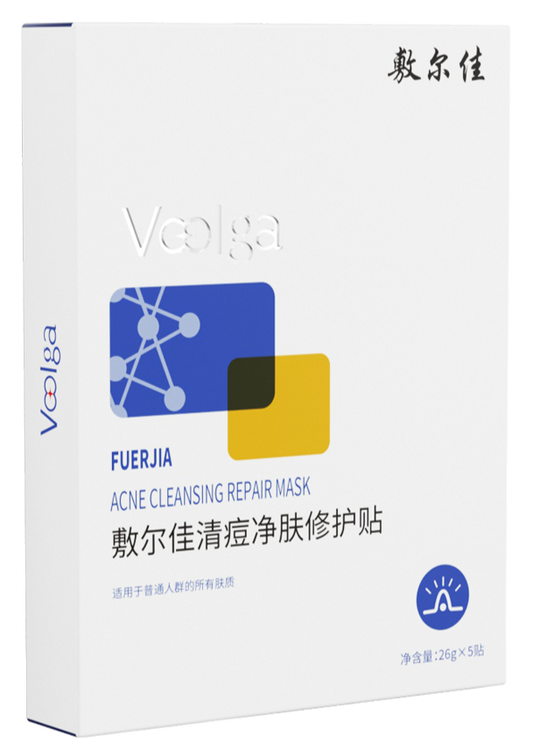
This is the centerpiece of the ritual — the 20 minutes where I sit still with a mask on my face and do nothing. On most evenings, I reach for the Voolga Ectoin Night Repair Mask. I like it for the evening because the essence has a weight to it — not heavy, but present. I can feel it on my skin, which keeps me mindful of the mask rather than forgetting it's there.
On other evenings, I use the Sodium Hyaluronate Dressing Mask — lighter, more watery, a different sensory experience. And occasionally, when I want something different, the Grape Seed Revitalizing Elastic Mask — its essence has a slightly different texture, more silky than gel-like.
The specific mask matters less than you might think. What matters is the 20 minutes. I sit in a chair by the window. I don't look at my phone. Sometimes I read; sometimes I close my eyes. The mask is a timer — it says, "you are not going anywhere for 20 minutes." That enforced pause is the ritual.
Our article on the quiet ritual of the sheet mask explores this stillness practice in more depth — the 20-minute session as a form of mindfulness.
Step 4: Removal and Patting (3 minutes)
I remove the mask and pat the remaining essence in with my palms — the teate approach. Warm palms, gentle pressure, deliberate movements. I press rather than rub. This is the part where I feel most connected to the traditions I described earlier — the idea that the hands are part of the practice, not just tools for moving product around.
Step 5: Seal and Settle (2 minutes)
If my skin feels like it needs a final layer, I apply a light moisturizer. Then I turn off the bathroom light. That's it. The whole thing takes about 30 minutes, but the core — the 20-minute mask — is what makes it a ritual rather than a routine.
What the Ritual Teaches
Here's what I've learned from a year of this practice:
The ritual is for the mind, not just the skin. I notice a qualitative difference in my sleep on nights when I do the full wind-down versus nights when I skip it. I'm not claiming the skincare causes better sleep — I'm saying the act of slowing down, of creating a 30-minute buffer between the day's activity and the night's rest, changes how I feel when my head hits the pillow. The ritual is a transition practice, and the skincare is the vehicle.
Consistency matters more than intensity. I used to do elaborate five-step routines twice a week and nothing the other five nights. Now I do the same simple three-step ritual every night, and it feels more meaningful. The repetition creates a rhythm — my body knows that when the mask goes on, the day is done.
The products are context, not the point. I rotate between a few masks — from the sheet mask collection and the sensitive skin soothing collection — but the ritual is the same regardless of which mask I use. The mask is an excuse to sit still. The 20 minutes of enforced pause is what I'm really after.
Seasonal shifts keep it alive. In summer, I sometimes refrigerate my masks and the coolness adds a new sensory dimension to the ritual. In winter, I run the tap until the water is properly warm and the steam itself becomes part of the experience. These small seasonal adjustments keep the practice from becoming automatic. You can read more about how I adapt my masking practice across seasons in our seasonal masking article.
Building Your Own Evening Ritual
If you're thinking about building an evening wind-down practice, here's what I'd suggest — not as instructions, but as starting points:
Start with the pause, not the products. Before you buy anything or plan a routine, just try sitting still for 20 minutes. No phone, no music, no mask. See what that feels like. If you find it restful, the mask is a natural addition — it gives the 20 minutes a structure and a sensory anchor.
Choose one product, not five. The full product lineup is there when you want to explore, but for the ritual itself, one mask is enough. I use the same two or three masks in rotation and never feel like I'm missing out.
Let it be imperfect. Some nights I'm too tired and I skip the mask. Some nights I do it in five minutes instead of twenty. The ritual doesn't require perfection — it requires showing up most of the time. The nights I skip make the nights I don't feel more deliberate.
Let it evolve. My ritual looks different now than it did a year ago, and it'll look different a year from now. The practice is alive — it changes with the seasons, with my energy, with what I'm going through. That evolution is part of what makes it a ritual rather than a chore.
This article shares personal reflections on skincare practices and self-care rituals. Voolga makes no claims about the health effects of its products or of any skincare practice.