The Rice Water Beauty Tradition: A Generations-Old Skincare Ritual
I did not learn about rice water from a skincare article. I learned about it from my grandmother, who learned it from her mother, who probably learned it from watching her own mother wash the family rice and set the milky water aside before she cooked anything. In my family, nobody ever called it a "beauty secret." It was just something you did — a small, unremarked-upon habit that traveled down the generations the way recipes and lullabies do.
It took me years to understand what my grandmother was actually doing when she saved that water. She was not chasing a trend. She was keeping a ritual alive. And that, more than any ingredient list, is what I want to talk about today: not what rice water does, but what the practice of rice water has meant for generations of women — and what it taught me about turning a skincare step into a ritual.
A Practice As Old As Rice Itself
Rice has been cultivated in East Asia for thousands of years — archaeologists trace domesticated rice in China back roughly eight millennia. Wherever rice became a staple, the leftover water from washing it became a household resource. It was used for cooking, for cleaning, and in many households, for the face.
The historical record is full of echoes. In Japan, the practice of washing the face with rice rinse water (and rice bran, the powdered outer layer of the grain) is associated with the beauty routines of the geisha — women whose livelihood depended on careful, daily grooming rituals. In Korea, the water left from washing rice — called ssal tteumul — has a long folk tradition of use in bathing and skincare. In China, accounts of court beauty practices describe elaborate daily routines in which rinsing and patting played a central part, part of a broader culture where grooming was treated as a discipline of daily attention rather than a quick cosmetic step.
I find it striking that this practice appears across so many cultures that grew rice. The details differ — the type of rice, whether the water is used fresh or fermented, whether it is patted or soaked — but the shape of the practice is the same. You wash the rice. You keep the water. You use it on your face. And you pass the habit on.
You can read more about the broader tradition in our piece on timeless Asian beauty secrets, and about older remedies in ancient remedies for deep skin hydration.
What the Practice Actually Looks Like
Here is the version my grandmother taught me, and the version I still do today when I want the full ritual. It takes about ten minutes and requires nothing beyond rice, water, and your own two hands.
Step one: wash the rice. Measure out a cup or two of rice as if you were cooking. Rinse it once or twice in a bowl — the first rinse is cloudy and starchy; that is the water you want. Pour it into a clean container, letting the grit settle for a moment.
Step two: strain and settle. Pour the milky water through a fine sieve or a clean cloth to catch any stray grains. My grandmother would then leave it to rest for a few minutes while she went about the kitchen. The water separates as it sits — denser starch sinks, cleaner liquid floats. Either layer can be used; the ritual is in the patience, not the chemistry.
Step three: the rinse. After cleansing my face, I cup the rice water in my hands and pat it gently over my face — a dozen light pats, the way you might pat on a toner. The water is cool, silky, and faintly sweet-smelling, with a soft, starchy texture that feels unlike anything from a tube. My grandmother would then let it sit a moment before moving on. Use it fresh the same day — it is a kitchen practice, not a shelf product, and it does not keep.
If I want to turn it into a full ritual, I follow the rinse with a sheet mask — a quiet twenty minutes that I have written about before in the quiet ritual of the sheet mask. The rice water and the mask do not need each other in any functional sense; they belong together the way two chapters of the same book belong together. The rinse is the beginning. The mask is the middle. The stillness is the whole point.
Why the Tradition Mattered — and Still Does
What strikes me most about the rice water tradition is how entirely ordinary it was. It was not a luxury. It was not a secret formula reserved for the wealthy. It was a practice built from the leftovers of dinner — a way of caring for yourself using what was already in the kitchen, requiring no money and no special tools. In households where elaborate beauty products were unaffordable or unavailable, rice water was the everyday answer: a small daily act of self-care folded into the most ordinary chore.
I think that is why the practice survived. It did not survive because of any particular property of the water. It survived because it was free, it was simple, and it was woven into the fabric of daily life in a way that required no extra time — the water was there anyway, so why not?
That is the part I try to carry forward. The rice water ritual reminded me that skincare does not have to mean products, expense, or complexity. It can be a quiet, thrifty, grounding act performed at the kitchen sink. It can be a way of saying to yourself: I have time for this. I matter enough to spend ten unhurried minutes on this.
How I Turned a Folk Practice Into a Personal Ritual
For years, I did rice water the way you do any habit — quickly, absentmindedly, half-thinking about the emails waiting for me. It took my grandmother's passing to make me slow down and actually pay attention to what I was doing and why.
Now, once or twice a week, I set aside the kitchen-sink version and do the full practice: I wash the rice slowly, deliberately, watching the water turn white. I strain it into a glass bowl. I bring it to the bathroom. I pat it on with both hands, and I let the sensation be the meditation — the cool water, the faint smell of starch, the feeling of my grandmother's rhythm in my own hands. Then I choose a mask from my mask collection, something familiar and gentle, and I sit with it for twenty minutes. Nothing else. No phone, no list, no agenda.
I wrote before that masking is where I found stillness — in seasonal masking, in morning rituals, and in the quiet evening version my grandmother would have recognized. Rice water is the oldest chapter of that story for me. It is the chapter where the ritual was not about a product at all — it was about continuity. About doing what the women in your family did, not because you expect anything from it, but because the doing itself is the connection.
The Sensory Memory
Let me describe the feeling, because the sensory layer is what makes this a ritual rather than a routine. The rice water is cool against warm skin — not cold enough to startle, just cool enough to wake you up. It is silky in a way that tap water never is; there is a softness to it, a faint resistance as you pat, like patting on a very light lotion. The smell is the smallest detail and the one that unlocks everything: a clean, starchy scent, like the air over a pot of rice just before it finishes. For me, that smell is memory itself — my grandmother's kitchen, her hands, her unhurried way of doing things.
If you grew up in a household where rice was a daily food, you will recognize that smell. And if you did not, it is worth experiencing at least once, because it is the closest thing I know to wearing your family history on your face.
A Simple Invitation
You do not need to be from a rice-growing culture to try this. The tradition belongs to anyone who wants to borrow its spirit: take something from your kitchen, an ordinary thing, and turn it into a deliberate act of care. For my grandmother it was rice water. For someone else it might be green tea, oats, or honey water. The specific ingredient matters far less than the turning — the moment you decide that this small thing, done slowly and on purpose, is a ritual.
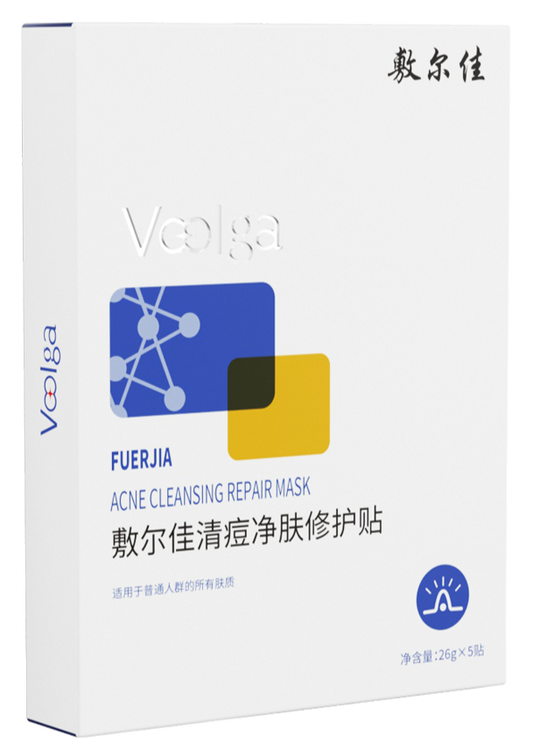
If you want to try it, here is my invitation. Next time you make rice, keep the wash water. Strain it. Pat it onto clean skin. Choose a mask from Voolga's collection — or any mask you already love — and give yourself the full quiet twenty minutes. Notice the coolness. Notice the stillness. Notice that you are doing something your grandmother, whoever she was, might recognize as care.
That is the tradition, as I understand it. Not a product. Not a promise. Just a practice — passed down, kept alive, and waiting for anyone who wants to pick it up.
This article shares personal reflections on skincare practices and self-care rituals. Voolga makes no claims about the health effects of its products or of any skincare practice.