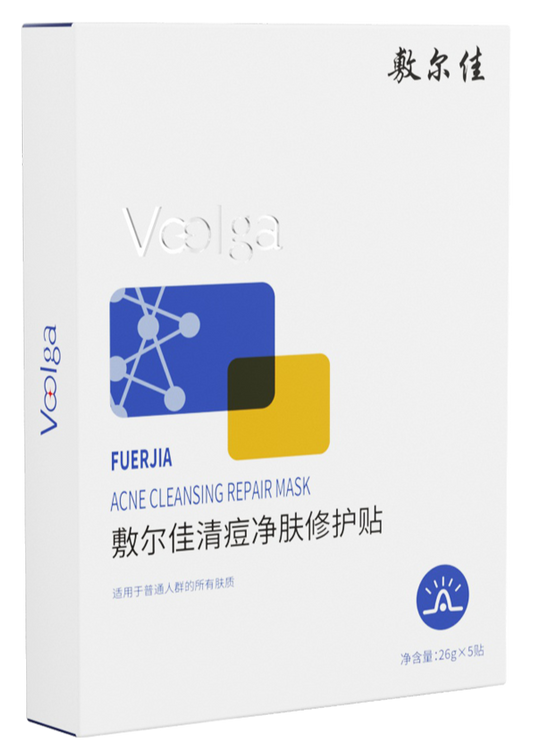
I have watched a lot of men buy a face wash, use it four times, and file it on the shelf behind the towels. The product was never the problem. The length of the routine it arrived in was. Nine steps is a wish, not a plan, and wishes get dropped by Thursday. Three steps is a habit. I would rather you use three products consistently than ten occasionally, and the whole of this article is built on that one sentence.
Voolga sells clinical-grade facial masks in North America, so most people find us through a mask and then ask what belongs around it. Here is the answer in advance: cleanse, moisturize, and, if you want one, a mask. Nothing else is required. Below I'll explain what each step does mechanically, where shaving and oily skin change the details, and how to pick a sheet-mask format without reading forty reviews first.
What a Routine Is Actually For
Strip the mystique and three jobs remain. Cleansing removes what has built up on the surface: sweat, the oil your skin has produced through the day, sunscreen, and the general grime of a commute. Moisturizing puts water-attracting ingredients onto the skin and then caps them with a layer that slows evaporation, which is the mechanical reason a moisturizer feels different from splashing water on your face. A mask is a timed, concentrated version of one of those jobs, worn for a set window and then either rinsed off or pressed in.
That is the entire architecture. Nothing in a starter routine is doing anything secret, and once you see the sequence as remove, then hold, then an optional treatment, you stop needing to memorize it.
Step One: Cleanse
Most men I know overwash. Twice a day is plenty for a face that isn't visibly dirty: once in the morning, once before bed. A gentle gel or cream cleanser, lukewarm water, about thirty seconds of light circles, then rinse. Hot water and a rough cloth feel productive and mostly take off more surface than you meant to; if your face feels tight and squeaky afterward, you used too much of the wrong thing.
An oily T-zone changes the texture you want, not the number of steps. If your forehead and nose go shiny by mid-afternoon, a gel cleanser with a lighter finish tends to feel more comfortable than a rich cream one, which matters mainly because you'll be more willing to keep using it. If your skin runs tight or dry, the cream version is the one that won't send you hunting for the moisturizer bottle the moment you dry off.
One practical note: if you shave in the morning, particularly in the shower, the shave handles part of the cleansing for you. That leaves one real cleanse at night, and one is easy to keep.
Step Two: Moisturize
This is the step men skip, and it's the one that changes how skin looks fastest, not because it does anything dramatic but because skin holding onto water reflects light differently from skin that isn't. You don't need a fifteen-ingredient formula. You need something you'll actually put on twice a day.
Two rules for choosing one. Match the texture to your climate and the finish you want: a light lotion or gel-cream for humid stretches, oily skin, and days you'd rather not look shiny; something heavier for winter, dry air, and nighttime. Then apply it to slightly damp skin, ideally straight out of the shower. That's when the layer does the most mechanical good, because you're capping water that's already there rather than adding oil to a dry surface.
If you want one extra layer and only one, a lightweight facial serum goes underneath the moisturizer and after cleansing. That still adds up to a two-step morning, and a thin water-based serum is the kind a man will keep using because it disappears in seconds. If that already sounds like one thing too many, skip it. Moisturizer alone is a complete routine.
Step Three, Optional: Where a Mask Fits
A mask is the third step, and "optional" is doing real work in that sentence. A sheet mask is a saturated fabric or fibre sheet you lay on your face, leave for fifteen to twenty minutes, and lift off. There's no rinsing, no basin to clean out afterward, and no timer to watch. It is the least fussy format on the shelf, which is exactly why it survives contact with a busy week.
The order is simpler than people expect. A sheet mask goes after cleansing and after any thin water-based layer such as a serum; it goes before a heavier cream if you use one. If you've ever wondered whether a mask is a cleanser, a serum, or a moisturizer, the honest answer is none of them. The full sequence, including where it lands relative to every other step, is laid out in our guide to where a sheet mask goes in a skincare routine.
Two mechanical details are worth knowing. A sheet mask works because the sheet holds liquid against your skin instead of letting it evaporate into the air; that's the format's entire trick, and it's why fit matters more than any claim on the pouch. And past the recommended wear time the sheet starts to dry and lift away, so there's nothing to gain from leaving it on for an hour. Take it off while it still has slip.
How you put it on changes the experience more than you'd think. Pressing the edges down around the nose and jaw, and folding the lower edge up rather than letting it drip, are basic skills that take one or two tries. Our sheet mask application guide covers the technique properly.
Choosing a Sheet-Mask Format Without Overthinking It
Two decisions cover almost all of it: how you want it to sit, and how you want it to finish. A standard woven or cotton sheet is the everyday version, laid on and left, with the loosest fit of the group. A bio-cellulose or dressing-style sheet is thinner and clings closer, so it slides less while you wear it. A hydrogel sheet sits between the two, cooler and smoother on contact. If you'd rather spread something on by hand than wear a sheet at all, that's a cream or gel mask, and it's a legitimate choice.
None of those is better than the others; they differ in fit, feel, and how much cleanup follows. If you want the full comparison of formats, our guide to every type of face mask maps the whole shelf side by side. For a first purchase I'd keep it to two questions: do I want to sit still for twenty minutes or not at all, and do I want something cool and wet or something creamy. Answer those and the format picks itself.
There is also a version with no timer to watch. Some masks are worn for a set window and then removed — our ectoin night repair mask is a sheet format you leave on for ten to twenty minutes and then peel off, with no rinsing and nothing to measure. Others are sleeping masks you apply and leave on overnight. If a mask you can simply forget about appeals to you, the overnight kind is the one to look for, and our guide to sheet masks vs sleeping masks covers the difference.
Post-Shave: What Actually Changes
Shaving is a mechanical process. A blade drags across the skin, takes a pass of surface cells and sebum with it, and what's left is more exposed than it was five minutes earlier. I'm not going to tell you a product fixes that, because that would be a claim I can't back. What I can tell you is how texture and order behave around it.
Whatever you apply right after a shave should be light, and it should be patted in rather than rubbed: flat palms, gentle pressure, no dragging. An alcohol-forward toner or an astringent splash tends to sting on freshly shaved skin, so if you use one at all, use it on a day you didn't shave. If you're wearing a mask on a shave day, shave first, then rinse, then cleanse gently, then mask. A sheet involves no rubbing at all, just laying and lifting, which some men prefer on a shave day purely for how it feels.
If you shave at night, the order is the same: shave, rinse with lukewarm water, moisturize.
If Your Skin Runs Oily
Oily skin doesn't need more steps. It needs lighter ones, used consistently. Same order: cleanse, moisturize, optional mask. Swap the textures rather than adding products. A gel cleanser over a cream one. A lotion or gel-cream over anything heavy. A mask format that doesn't sit thick on the face.
If you want something targeted in the mix, the acne control range gathers the oil-facing products in one place, and the lactic acid oil control and astringent mask is a sheet mask that finishes clean rather than creamy, which is the feel most oily-skinned people prefer. For shine through the day, blotting paper does more than a third cleanse would.
The Lineup I'd Hand Someone First
If you're starting from zero, buy three things and nothing else: a cleanser whose texture matches your skin, a moisturizer you'd describe as light, and one mask. That's it. No toner, no essence, no device. Add a second product only when the first three have been in rotation for a month without a gap.
The mask is where most men overthink and overspend, so keep it small. One sheet format for a night you have twenty minutes, and one leave-on option for the nights you have none, is a more useful pair than six sachets of the same thing. If you'd rather see everything in one place before deciding, the full Voolga range is the easiest sweep.
The reason I keep pushing the short version is unglamorous: every man who has asked me for a routine wanted the one that works, and that's the one short enough to survive a bad week. Skin varies from person to person and so does the routine that fits, so treat the specifics here as a starting frame rather than a prescription.
Questions I Get Asked
Do men need a different routine from women?
No. A routine is a sequence of mechanical steps, and it works the same way on anyone. The differences that actually show up in practice are about facial hair, shaving, and how oily skin runs, not about sex. The three-step frame here suits any skin.
How long does a three-step routine take?
About ninety seconds on a normal day: roughly thirty seconds to cleanse, fifteen to moisturize, and the rest spent not thinking about it. Add fifteen to twenty minutes only on a day you wear a sheet mask, and those are minutes you can spend sitting down.
Can I use a sheet mask every day?
The format doesn't break if you do, but most people find once or twice a week is where it stays a habit rather than a chore. Follow the wear time printed on the pouch, and take the sheet off while it still has slip rather than letting it dry down.
What order do I use if I shave?
Shave first, rinse with lukewarm water, then moisturize. If you're wearing a mask that day, shave first, then cleanse gently, then mask. Pat products in with flat palms rather than rubbing, and keep alcohol-forward toners for days you didn't shave.
This article is for informational purposes about skincare products and ingredients. Voolga makes no claims about the health or medical effects of its products.