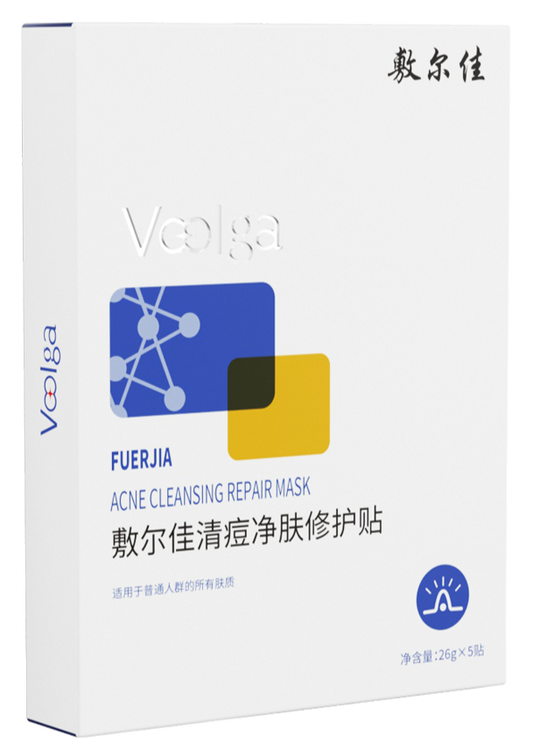
I keep my masks in one shallow drawer, jumbled together with no order, and over a few years that drawer has taught me more about formats than any label has. The sheet masks get used up fastest. The clay jar at the back is half dried at the rim. The peel-off tube I bought with such enthusiasm was given away to a friend eighteen months ago and I have not missed it once. This is the piece I wish I'd had at the start — not a ranking, and not a deep dive into any one format, but a plain map of what is actually on the shelf and what each one is like to use.
A Category Map, Not a Ranking
Every mask you can buy falls into a handful of formats, and the format matters more than the marketing on the front of the box. A format decides four practical things: how the mask fits your face, whether you wash it off or leave it on, how much mess it makes, and how long it takes from opening to done. Those four axes are the honest way to compare formats, because they are about use rather than outcome. I'll walk the six families in order — sheet, wash-off clay and mud, peel-off, leave-on and sleeping, eye and patch, and cream and gel — and link out to the deeper pieces where a format deserves its own treatment. If you want the whole landscape in one place, the full Voolga catalogue is a useful place to browse formats side by side.
Sheet Masks: The Format Built Around Fit
A sheet mask is a saturated fabric or fibre sheet you lay on your face and leave for fifteen to twenty minutes, then lift off. It feels cool and wet, it stays put on its own, and there is no rinsing — you press in whatever is left and move on. Mechanically it is the least messy format and the most fit-dependent: the whole point is the sheet hugging the contours of your face so the formula sits against skin rather than drying in the air. When the fit is right, a sheet is the mask I reach for when I want the shortest possible session with no cleanup.
I'll point you to the sheet mask collection for the range, and our guide to how sheet mask materials compare if you want the manufacturing detail on bio-cellulose, cotton, and hydrogel — that side of the sheet format is worth its own article, and it already has one. A dressing-style sheet like the sodium hyaluronate repair mask is the version I keep restocking, because the format sits flat and the wear time is a clean twenty minutes.
Wash-Off Clay and Mud Masks: The Temporary Matte Finish
Clay and mud masks are a paste you spread on with fingers or a brush, let dry for ten to fifteen minutes, and rinse off at the sink. The feel is thick and cool going on, then tightening as the paste sets — some people love that pull, some find it claustrophobic. This is the messiest format by a distance: it lives in a jar, it needs a rinse, and it does not travel well. Mechanically, a wash-off clay format is used for a temporary matte finish and for drawing a heavy-feeling layer off the surface, which is why it reads as the evening counterpart to a lighter sheet.
The mud mask collection is where those formats live, and the oil-control wash-off side of it is exactly the comparison we already made in charcoal mud masks versus sheet masks. I won't repeat that argument here. I'll only add that my own clay use is seasonal — I reach for a wash-off paste in a hot, humid stretch, and put it away once the air turns cool and dry.
Peel-Off Masks: The Film You Remove in One Piece
A peel-off mask goes on as a wet gel or liquid, dries to a rubbery film over fifteen to twenty minutes, and comes off in one piece when you pull it. The first ten minutes are pleasant; the last five, once the film tightens, are where people split. It is a low-mess format right up until the moment of removal, which is the part that decides whether you love it. I gave mine away because I never enjoyed the peeling itself, and I have come to think of peel-off as the format you either find satisfying or you don't — there is no middle.
What it is good at, mechanically, is covering a wide area with a thin, even film that sets in place. If you like the ritual of removal, it delivers that in a way no other format does. If you don't, no formula will rescue it for you.
Leave-On and Sleeping Masks: The No-Rinse Format
A leave-on or sleeping mask is a cream or gel you apply as the last step of the evening and simply go to bed with. There is no wash-off, no timer, and no cleanup — the format's whole identity is that the wear time is the night rather than twenty minutes. It feels like a heavier moisturiser going on, and it is the least interruptive format of the six, because it never asks you to come back to the sink.
This format overlaps with sheet masks in people's minds, and the two genuinely differ in pacing, so rather than spell that out again I'll send you to our comparison, sheet mask vs sleeping mask. For the format itself, the leave-on is what I keep for nights when I want a mask but have no attention left for one — there is no timer to watch and nothing to come back to.
Eye Masks and Patches: Small Format, Small Area
Eye masks are crescent-shaped patches, often a hydrating gel, that you press under the eyes and leave for fifteen to twenty minutes. They are the most targeted format on the shelf: they cover one small area rather than the whole face, they stay put while you do something else, and they make almost no mess. When someone wants a mask that fits into a busy morning rather than an evening ritual, this is the format I point them to.
The trade is coverage — you are treating a patch of skin, not a face. The crystal eye recovery mask is the one I keep on hand, and it is the format I reach for when twenty minutes of stillness is all the time I have.
Cream and Gel Masks: The Spreadable Middle Ground
Cream and gel masks are the jarred, spreadable formats that sit between the sheet and the clay. You apply them by hand like a thick moisturiser, leave them ten to twenty minutes, then either rinse, wipe, or press the remainder in depending on the formula. The feel is softer and less tightening than clay, and the mess is moderate — more than a sheet, less than a full paste you have to rinse from the basin. It is the most flexible format, and the one I recommend first to someone who is not sure where to start.
Because it is spreadable, this format layers easily with what you already use; if you keep a serum in your routine, a cream-mask evening is the natural place to use it underneath. If you want to run more than one format in a single session, that is exactly the technique our guide to multi-masking and the double-masking technique covers — a spreadable cream on the cheeks, a wash-off paste on the T-zone, each doing its own mechanical job.
The Formats Side by Side
Here is the whole map in one view, compared only on how each format behaves in use.
| Format | Applied as | Wash-off or leave-on | Typical wear time | Mess |
|---|---|---|---|---|
| Sheet | Saturated sheet laid on | Leave-on, no rinse | 15–20 min | Minimal |
| Wash-off clay / mud | Paste spread by hand or brush | Wash-off at the sink | 10–15 min | Highest |
| Peel-off | Wet gel that sets to film | Removed in one piece | 15–20 min | Low until removal |
| Leave-on / sleeping | Cream or gel, last step | Leave-on overnight | All night | None |
| Eye / patch | Gel patch pressed on | Leave-on, small area | 15–20 min | Minimal |
| Cream / gel | Spread by hand | Rinse, wipe, or press in | 10–20 min | Moderate |
How I Choose a Format on a Given Night
My own rule is unglamorous: pick the format that matches the time and the tolerance I actually have, not the one that sounds best. If I have twenty quiet minutes and no desire to stand at the sink, that is a sheet or a leave-on. If I have energy and want the ritual of a rinse, that is a clay paste. If I have five minutes and a mirror, that is an eye patch. The format decides the evening, and the evening decides the format.
The mistake I made for years was buying formats by reputation rather than by how I actually spend an evening. Peel-off sounded exciting; I am not a peel-off person. Clay sounded serious; I use it three or four times a season. The honest version is that a mask drawer should mirror your week, not an idea of who you might become. Start with the format that fits the time you actually have, and let the rest of the drawer fill in later.
Questions About Mask Formats
What are the main types of face masks?
Six formats cover almost everything on the shelf: sheet masks, wash-off clay and mud masks, peel-off masks, leave-on or sleeping masks, eye and patch masks, and cream or gel masks. They differ in fit, whether you rinse them off, how messy they are, and how long they take.
What is the difference between a sheet mask and a clay mask?
The format, mainly. A sheet is laid on and left, needs no rinse, and fits the face as a saturated layer; a clay or mud mask is spread on as a paste, dries, and is washed off at the sink. One is the tidiest format, the other the messiest.
Are peel-off masks and sleeping masks the same thing?
No. A peel-off mask dries to a film you remove in one piece after fifteen to twenty minutes. A sleeping mask is a cream or gel you leave on overnight with no removal step at all.
Which mask format should a beginner choose?
A cream or gel mask, or a sheet mask. Both are easy to apply, forgiving on timing, and low-mess, which makes them the least demanding places to start before you explore wash-off pastes or peel-off films.
This article is for informational purposes about skincare products and ingredients. Voolga makes no claims about the health or medical effects of its products.