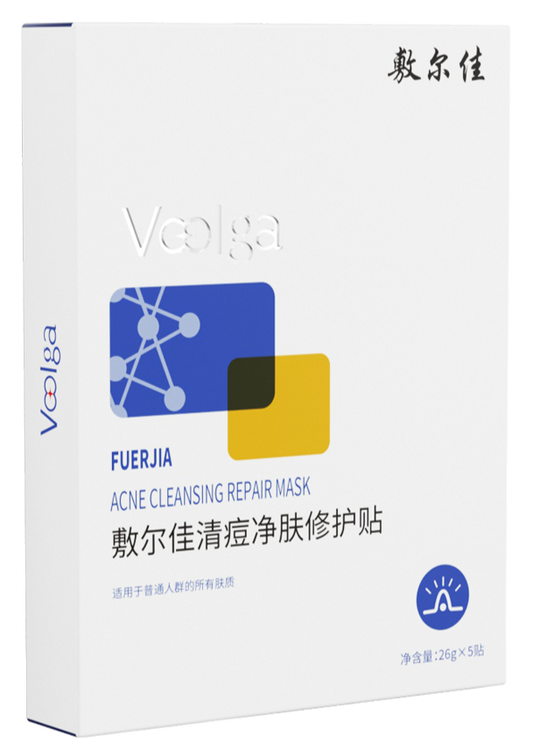
Twice a week I put a sheet mask on my face and then spend twenty minutes doing almost nothing except sitting in one chair with a notebook and a pen. The mask is the easy part to explain; the notebook is the part people ask about. It's also the part I'd defend hardest, because it's what turned something I did to my face into something I actually pay attention to.
The Skincare Journal I Keep, and What It Isn't
A skincare journal is a record of what an evening felt like, not what it produced. That's the whole idea. Mine is a thin softcover notebook, one page per masking evening, and each page holds three or four lines about the room, the mask, the pace of the evening, and one thing I noticed about the day.
I started it about two years ago, during a stretch when I was reading a lot about sitting still with a sheet mask for twenty minutes and almost none of it stuck. What stuck was the notebook, because it gave the twenty minutes a job that had nothing to do with my face.
"Journal" is a loaded word, so here's the shape of it up front. This isn't a gratitude journal, a habit tracker, or a productivity system. It has no columns. Most pages are four sentences and a date.
What Actually Goes in the Notebook
Almost none of it is about skincare, which surprised me. I assumed I'd write about products; instead I write about the room and the way the evening moves through it.
Here's a typical page, transcribed more or less as written:
- The room. "Lamp turned down to the second click. Radiator ticking. Neighbour's dog going for it again."
- The mask. "Cool across the forehead, snug at the jaw, lifting at my chin by about minute fifteen. Smells faintly of nothing, which I like."
- The pace. "Slow for the first ten, then I started watching the clock. That's usually a sign I brought the day in with me."
- The day, in one line. "Three calls, no lunch, forgot to answer my sister."
- One thing I noticed. "The kitchen window has been dirty for weeks and I only just saw it."
That's the entry. No analysis, no conclusion, and I don't reread pages hunting for patterns. The writing takes about four minutes of the twenty; the rest of the time I sit there with a mask on, which is the point of the exercise.
What I Deliberately Leave Out
No numbers. That's the one rule, and it's the rule that makes the rest of it work.
I don't record dates, days since anything, how many masks I've used this month, or whether something "worked". I don't keep a before and after. I don't write about my skin at all, really. I write about the room.
I tried the other version first. For about six weeks I kept a page with a small grid: what I used, and a score out of five for how the evening went. Once there was a number, I was managing the number. I'd pick the mask I thought would score well instead of the one on top of the stack. I'd round a four up to a five because the evening had been nice. And on the nights I didn't want to write anything, I'd fill in the grid anyway and skip the sentences, because the grid was the part that felt like it counted.
The grid turned an evening into a task with a scoreboard, so I tore out the pages and started again with the rule. No numbers, no charts, no streaks, nothing to compare with last week. When I catch myself writing "better" or "worse", I cross it out and write what I actually saw.
Why the rule matters more than the writing
Because a number invites you to do something about it. A sentence doesn't. "Cool at the jaw, lifting at the chin" is an observation. "Fit: 7 out of 10" is a problem to solve, and the moment the evening has a problem in it, it stops being an evening and becomes a project.
The Shape of the Evening: Lamp, Mug, Pen, Same Chair
The evening self care ritual I've ended up with is less about products than about furniture, and the furniture is not incidental. It's how I know the thing has started.
Same chair: a grey armchair near the radiator, too low for a desk and too high for the floor. Same lamp: a brass thing from a junk shop with a forty-watt bulb, turned down to the second click. Same mug: chipped on the rim, always tea, always too hot to drink for the first ten minutes. Same pen: a cheap black fineliner, the kind that comes in a box of ten, because I lose them.
The order doesn't change either. Kettle on. Lamp on. Phone face down in the other room, which is the part I've had to defend most often. Hands washed. Notebook open on the arm of the chair. Mask out of the packet. Mask on. Then write.
I don't set a timer. I've done this enough times to feel when twenty minutes has gone by, and the mask's edges lifting tells me before an alarm would. That's part of it too: an evening with no alarm in it. If you already have a version of this hour that works, the nighttime wind-down ritual I wrote about earlier is the closest relative to what I do here.
Where the Mask Fits In
The mask is the metronome. It's what makes the twenty minutes a fixed length instead of an intention.
The first minute is always about the fit rather than the feeling. The sheet comes out of the packet heavy and cool and dripping, and I smooth it from the middle of my forehead outward, pressing the edges down along the jaw and up over the cheekbones. Then I sit down. Then the pen. That order matters more than it sounds like it should, because sitting down first would mean the mask never goes on at all.
I keep a stack in the bathroom drawer and take whatever's on top, which is deliberate rather than lazy. Choosing is a decision, and decisions belong to the earlier part of the day. If you want to see how much the formats differ, the sheet mask collection is where that range shows up most clearly.
The two I reach for most are the ectoin night repair mask, because the sheet sits heavier in the hand and takes a moment longer to smooth down, and the medical sodium hyaluronate dressing repair facial mask, because it seats closer at the edges and gives me less to fiddle with while I write. Neither is a claim about anything except how they handle in the hand.
If your face has opinions about what it will tolerate, the sensitive skin soothing range is where I'd browse first, and the full range of Voolga masks is the place to compare formats side by side.
How the Habit Started, and What Changed
It started on the back of a receipt. I know because I found it months later in a coat pocket: two lines about a cold evening, a mask that didn't fit my chin, and a note that I'd spent the first ten minutes thinking about a work email.
Then a cheap notebook. Then, slowly, an appointment. Three things changed over two years:
- From every night to twice a week. Twice keeps it special. Seven nights made it a chore, and I stopped writing.
- From long entries to short ones. My first pages run half a page each, all of them trying to be interesting. Now it's four lines, and they're better.
- From "did it work" to "what was it like". That's the change that mattered. The question changed, and the evening changed with it.
Why It Isn't a Routine Log
A routine log exists to make the next time easier. It records what you did, in order, so you can repeat it and compare it. That's a perfectly good thing to keep. Mine just isn't that, and the difference is worth naming, because skincare journaling gets used to mean both.
A log faces backwards and forwards at once: what I did, and whether it's working. A journal of this kind only faces the evening it's in. A log rewards consistency, and a streak is its natural shape. What I keep rewards attention, and attention has no streak. I've never looked at the notebook and felt behind.
Here's a practical test. If you could hand your notes to someone and they could reproduce your evening exactly, you've written a log. If they'd only come away knowing what the evening was like, you've written the other thing.
Skincare journal ideas, if you want somewhere to start
Five prompts, and then stop. One line about the day. One sentence about the room, meaning temperature, light, and sound. One sentence about the mask, and only about how it felt: the fit, the texture, the temperature at the start. One line about the pace of the evening, and whether you were in it or ahead of it. One thing you noticed that had nothing to do with your face. Date the page. Don't number it, don't score it, don't compare it with the last one.
That's the whole system. It takes four minutes, and it's the reason the other sixteen are worth having.
Twenty Minutes, and Nothing to Report
I can't tell you this did anything. I've kept the notebook for two years, twice a week, and I cannot report a single measurable result from it. No number went up. Nothing is charted. If you're looking for the version where the ritual pays off in a figure, this isn't that piece, and I'd rather say so than dress it up.
What I can tell you is what's actually in the notebook. Page 214 is a Tuesday in February: lamp too bright at first, tea too hot, mask snug at the jaw, one line about a phone call I'd been putting off, and a note that I'd been sitting with my shoulders somewhere up near my ears all day without noticing. Nothing happened after that page. I noticed, wrote it down, and went to bed.
That's the whole return. I notice more of my own evenings than I used to, because I write four lines about one of them twice a week. The mask is what gives the twenty minutes a shape. The pen is what makes me sit inside it. Everything I can honestly promise ends there.
If you want the wider series, the tea ceremony masking ritual is the version of this evening that leans hardest into slowness, the morning mask ritual is the same twenty minutes moved to the start of the day, and seasonal masking is what happened to my practice when the weather turned. The chilled sheet mask ritual is the one I keep for the hot end of summer.
Start with one page. Write four lines. Count nothing.
This article shares personal reflections on skincare practices and self-care rituals. Voolga makes no claims about the health effects of its products or of any skincare practice.