The Silk Pillowcase Ritual: Night Textiles and the Beauty of a Made Bed
November 8, 2026
The sound is the thing I didn't expect. Not a rustle exactly, more of a hush, like a page turning in another room. The first night I slept on a silk pillowcase I spent a full minute moving my head against it and listening. Then I turned the lamp to its lowest setting and lay in the half-dark with my cheek on something cool that slid instead of dragged.
I want to be careful about what I'm claiming. A great deal is written about silk pillowcases as though the pillowcase itself were doing something to your face. I don't buy it. A pillowcase is a textile. What I can tell you is that making a bed at night has become one of the few things I do slowly, and the silk is why I notice.
The Last Step Isn't Skincare. It's a Made Bed.
My evenings run in a fixed order. I wash my face. I mask, if it's a masking night. Then I turn down the bed. The sequence matters more than any single step, and I wrote about the wider shape of it in the evening wind-down. The mask is not the finale. The finale is the bed.
The ordering is practical. A sheet mask asks you to lie still for fifteen or twenty minutes, and if the bed is already turned down when you peel it off, you are not doing chores afterward with damp cheeks. You are getting into something that was waiting. If you have wondered where a sheet mask goes in your routine, the short version is cleanse, mask, then the part of the night that isn't skincare.
That last part is the part I used to skip. For years I got into bed the way you get into a car. Now I smooth the case flat with both hands first. It takes ninety seconds and changes the register of the evening.
What a Made Bed Actually Feels Like
A well-made bed at night is mostly a set of small physical facts. The case is cool when you first put your weight on it. The fabric slides under your head rather than gripping it, so turning over is a smooth motion and not a negotiation. The sheets have a sound, quieter than cotton, closer to a curtain moving.
Then there is the light. I keep a small lamp on the dresser and turn it down before I get in. At that level the silk catches light along its folds and goes matte in the hollows. A made bed in low light has a landscape to it.
And the weight. A silk case is light but not weightless. When you lay your head down the fabric settles, then stops moving. That settle is the physical signal that the day is over.
Where Silk Comes From
Silk is old enough that its origins arrive as legend. The story most often told in China credits Empress Leizu, around 2640 BCE, with discovering the fiber when a cocoon dropped into her tea. That is legend, not record. What is documented is that people in China raised silkworms and reeled silk for thousands of years, and that for a long stretch the process was a guarded secret.
The secrecy is part of why the cloth carried status. In parts of Chinese history, sumptuary rules governed who could wear silk and in what colors. It moved outward into Korea and Japan and west along the routes that later took the name Silk Road. In Europe it arrived as an import priced like a treasure.
Silk also has a long history in East Asian bed culture. In Japan it went into futon covers and quilt wadding. In Korea it appeared in bedding and formal textiles. In China, silk quilts and silk-covered pillows sat alongside lacquer and porcelain. None of this was about skincare. It was about the quality of rest and the worth of a textile you touch for eight hours a night.
Silk entered the bed as a mark of care, not as a remedy. The pillow was a nice thing to own. It still is.
Silk as a Beauty Textile: What the Tradition Holds
Somewhere along the way silk picked up a second reputation, as a fabric worn close to the skin on purpose. The tradition holds that silk is a kind textile to lie against, that its smooth face beats rougher weaves, and that people who cared about their appearance chose it for that reason. Nobility in East Asian courts wore it next to the body.
I am describing those beliefs as beliefs. The tradition carries them and I am not asserting them as fact. What I can say is that the tradition is not silly: a fabric that slides rather than drags feels different against a cheek. For another practice in the same lineage, a household ingredient that became a ritual without anyone proving anything, the rice water beauty tradition is the piece I wrote.
I Am Not Going to Tell You That a Pillowcase Changes Your Skin
I am not going to tell you that a different pillowcase changes your skin. That is not what this is. I don't know what a pillowcase does to a face. What I know is what the object is made of, how it feels, how it should be washed, and what it does to the shape of an evening.
Take the framing from this piece: the pillow is a step in the ritual, never the active agent. The mask is a mask. The bed is a bed. The point is the order and the pace, not a result you can measure in a mirror.
How to Wash a Silk Pillowcase
Silk is a protein fiber, and protein fibers do not like heat, strong alkalinity, or rough handling. Most fail in the machine, not in the making. The care routine is short once it becomes habit.
Hand wash in cool water. Fill a basin with water barely cool to the wrist, add a small amount of mild, pH-neutral detergent, and let the case sit three or four minutes. Nothing with enzymes, bleach, or fabric softener. Enzymes break down protein, and silk is protein. Swish it by the corners and let the water work.
Rinse at the same temperature. This is the step people skip. A sudden change from cool wash water to cold tap water can leave water marks or set a crease in the face of the cloth. Keep the temperature steady and rinse until the water runs clear.
Never wring it. Lift the case out, let it drain, and press it between two towels. Lay it flat on a drying rack or hang it over a padded hanger, away from direct sun, which fades color and weakens fiber. A low iron on the reverse, or a hand steamer held a few inches away, takes out creases once it is nearly dry. Store it in a cotton bag, not plastic.
| Do | Don't |
|---|---|
| Cool water, mild pH-neutral detergent | Hot water or an enzyme detergent |
| Rinse at the same temperature | Bleach or fabric softener |
| Blot between towels | Wring or twist the fabric |
| Dry flat or hang in shade | Tumble dry or dry in direct sun |
| Low iron on the reverse, or steam | Press a hot iron on the face of the cloth |
| Store folded in a cotton bag | Store in plastic |
How often to wash it is a judgment call. A pillowcase sits against a face and hair for eight hours. I wash mine weekly and keep a second one in the cupboard. Two cases, rotated, is the most useful thing I did for this ritual.
Choosing One: Momme, Weave, and Seams
Momme is a Japanese unit for the weight of silk fabric. One momme is about 4.34 grams per square meter. In bedding the common weights are 19, 22, and 25. Nineteen is light and fluid and is what most pillowcases use. Twenty-two is denser with a heavier hand and less drape. Twenty-five feels substantial and holds a fold. Heavier weights are more opaque and hold up longer against washing. That is a fact about cloth, not a promise about your face.
| Momme weight | What it feels like | Where you see it |
|---|---|---|
| 19 momme | Light, fluid, high sheen, drapes easily | Standard pillowcases, most common |
| 22 momme | Denser, slightly heavier hand, less drape | Mid-weight bedding, a good middle ground |
| 25 momme | Substantial, cool, holds a fold, more opaque | Heavier bedding, higher price tier |
Weave matters next. Charmeuse is a satin weave with a shiny face and a matte back, the classic pillowcase fabric. Habotai, sometimes sold as china silk, is a plain weave: lighter, thinner, more prone to creasing. Crepe de chine has a slight texture and a matte surface. None is better in the abstract; the difference is taste.
Seams are where a case is quietly made or quietly cheated. A French seam encloses the raw edges inside a folded casing. A hand-rolled hem takes time. A serged edge is cheaper and can pucker a lightweight silk. If the listing doesn't say, ask. One more label: silk is graded, and 6A sits at the top of the standard scale. It describes the raw fiber, not the finished case, but it tells you the maker is paying attention.
What Changed in My Evenings
Nothing dramatic changed. My skin is my skin. But the last hour of my day got quieter. I stopped thinking of the bed as a place I fell into and started thinking of it as the final room of the evening. I notice the light now. I notice the sheets when I turn over. I notice whether I made the bed.
There is a sillier change too. I take better care of the case than of anything else I sleep on. I wash it on a schedule and keep the second one folded in the cupboard. I don't eat in bed anymore, because crumbs on silk are a self-inflicted problem. The masks are still in the routine, but the ritual moved. It used to end at my face. Now it ends at the bed.
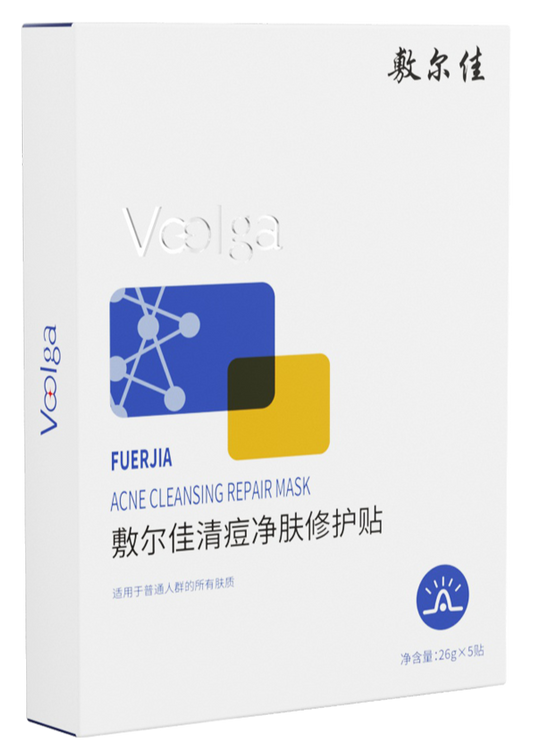
If you want to build the rest of the evening around this, the chilled sheet mask ritual is what I reach for on warm nights, and how my ritual changes with the weather covers the seasonal shifts. If you are stocking up for a masking night, the sheet mask collection is the first stop. The full Voolga collection is where to browse everything, and the complete lineup lists it in one place.
Questions I Get Asked About This Ritual
What is a silk pillowcase ritual?
It is making the bed the last step of the evening rather than an afterthought. You do your skincare, you mask if it's a masking night, then you make the bed slowly before you get in. The pillowcase is the object you notice, not something you apply.
How often should you wash a silk pillowcase?
Most people land on once a week, or every few nights if they mask in bed. Keeping a second case on hand makes the rotation easy, so the bed is never stripped and waiting.
Can you machine wash a silk pillowcase?
Some makers say yes, on a delicate cycle in a mesh bag. Hand washing in cool water is the safer default and what most care labels recommend. Never tumble dry it.
What momme weight should a silk pillowcase be?
Nineteen momme is the standard and the lightest common weight. Twenty-two is denser with less drape. Twenty-five is heavier and more opaque. Pick by the hand-feel you want, not by a number someone told you was correct.
This article shares personal reflections on skincare practices and self-care rituals. Voolga makes no claims about the health effects of its products or of any skincare practice.